
The Role of Project Manager in Construction Lifecycle
The role of project manager in the construction lifecycle is defined as the full-span accountability for delivering a project from initial conception through final closeout, covering scope, schedule, budget, quality, and safety at every phase. This role, formally recognized in construction management as the Owner’s Representative or Construction Project Manager (CPM), carries both strategic and operational dimensions that shift in emphasis as the project moves through its six primary phases. Tools like Procore, KPI tracking dashboards, and contract management systems are not optional accessories. They are the operating infrastructure of effective project oversight. Understanding exactly how these responsibilities evolve across the construction project lifecycle is what separates project managers who deliver on time and on budget from those who spend their careers managing crises.
What is the role of project manager in the construction lifecycle?
A construction project manager’s duties span the full lifecycle: scope planning, procurement, contract and relationship management, construction oversight, financial control, safety compliance, communication, risk management, and closeout. That list is not sequential. It describes responsibilities that run concurrently, with emphasis shifting depending on the current phase. The construction management role demands that you hold the entire project in view while executing the specific tasks the current phase requires.
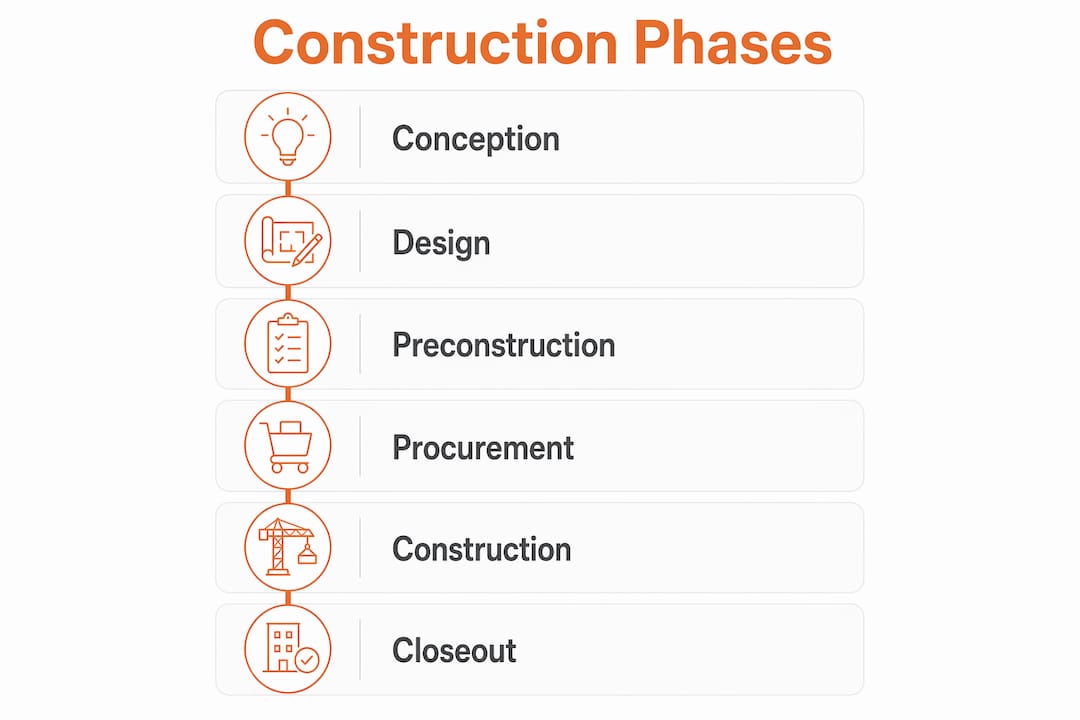
The six phases of the construction project lifecycle each demand a distinct operating posture from the project manager. During conception and planning, the work is strategic: defining scope, establishing feasibility, and setting the financial baseline. During permits and preconstruction, the focus shifts to design coordination and regulatory compliance. Procurement requires contract negotiation and subcontractor qualification. Construction execution demands active site oversight, schedule management, and financial control. Post-construction and closeout require documentation, punch lists, commissioning, and formal handover.
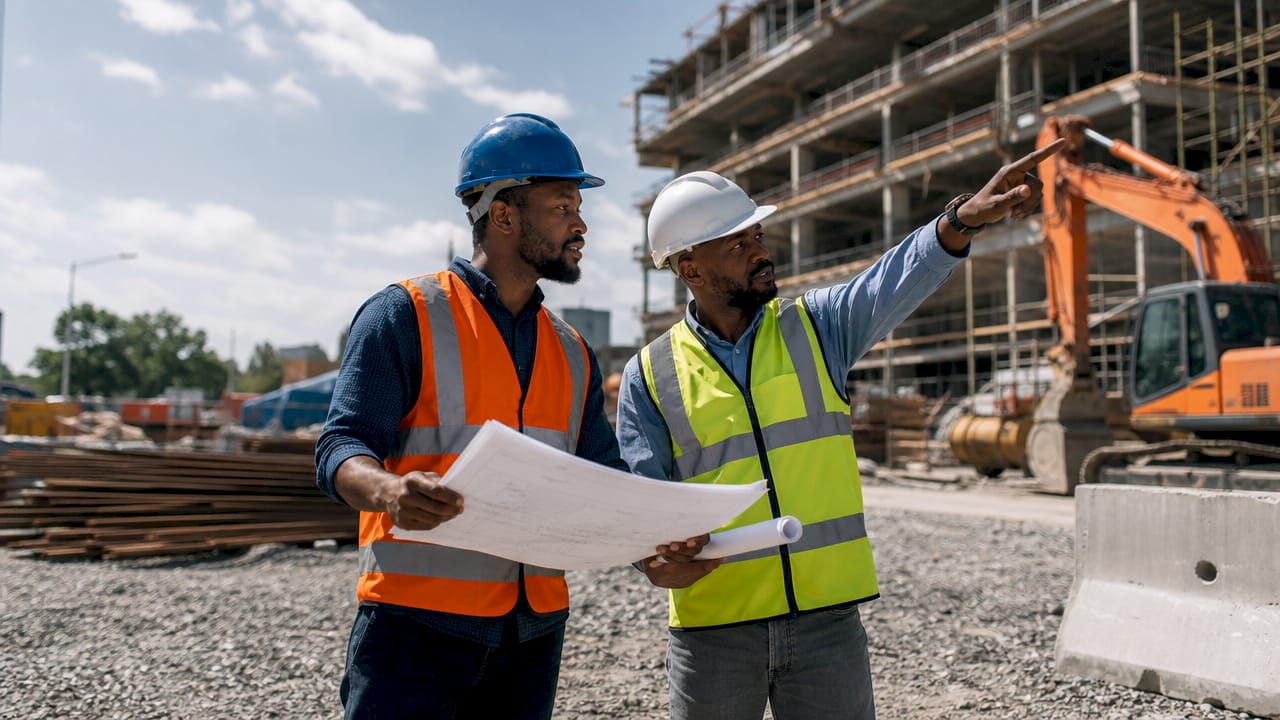
What makes this role genuinely difficult is not the technical knowledge required at any single phase. It is the ability to transition cleanly between modes of work while maintaining continuity of information, relationships, and accountability across all six phases.
| Phase | Primary PM responsibilities |
|---|---|
| Conception and planning | Scope definition, feasibility analysis, budget baseline, stakeholder alignment |
| Permits and design | Regulatory submissions, design review, zoning coordination |
| Preconstruction | Design coordination, risk identification, subcontractor pre-qualification |
| Procurement | Contract negotiation, vendor selection, purchase order management |
| Construction execution | Schedule control, budget reconciliation, safety compliance, RFI management |
| Post-construction and closeout | Punch list completion, commissioning, documentation handover, warranty tracking |
Pro Tip: During preconstruction, schedule a formal design coordination review with your architect, structural engineer, and MEP (mechanical, electrical, plumbing) consultants before any procurement begins. Resolving conflicting site requirements at this stage costs a fraction of what the same conflict costs during active construction.
How do project manager responsibilities differ from site manager roles?
The most persistent source of confusion on large construction projects is the boundary between the project manager and the site manager, also called the superintendent. These roles are complementary, not interchangeable, and conflating them creates accountability gaps that cost money.
The project manager operates primarily off-site or at the owner’s level, managing contracts, budgets, schedules, and stakeholder relationships. The site manager, or superintendent, operates on-site, directing daily trade activities, enforcing safety protocols, and managing the physical sequence of construction work. Project managers oversee lifecycle and contracts strategically; site managers supervise day-to-day site activities and trades.
Here is where the distinction matters most in practice:
- Contract authority: The project manager holds signature authority on contracts, change orders, and payment applications. The site manager does not.
- Budget control: The project manager owns the project budget and approves expenditures against the cost plan. The site manager manages labor productivity and material delivery on the ground.
- Stakeholder relations: The project manager is the primary point of contact for the owner, design team, and local authorities. The site manager interfaces primarily with subcontractor foremen and trade supervisors.
- Risk ownership: The project manager identifies, documents, and manages project-level risks. The site manager responds to immediate site-level safety and operational risks.
- Schedule accountability: The project manager owns the master project schedule and manages float. The site manager executes the three-week look-ahead schedule.
The practical implication is that both roles must communicate daily. When a site manager identifies a scope conflict or a subcontractor delay, that information must reach the project manager immediately so contract and financial consequences can be addressed. Breakdowns in this communication channel are a leading cause of schedule overruns on commercial construction projects.
What skills and tools does a project manager need for budget and schedule control?
Project control, which encompasses KPI tracking, budget monitoring, and schedule reconciliation, is not a phase-specific activity. It runs continuously from the moment a project baseline is established through the final closeout report. Project managers who treat budget reviews as monthly events rather than weekly disciplines consistently find themselves reacting to problems that were visible weeks earlier.
The core disciplines of project planning in construction include scope definition, resource allocation, risk management, and financial forecasting. Scope definition is the foundation. A poorly defined scope at the planning phase generates change orders throughout construction, each one eroding margin and extending schedule. Resource allocation requires matching the right subcontractors and suppliers to each phase, which is why qualifying subcontractors before project start is a non-negotiable step in preconstruction.
Risk management in construction project phases follows a clear hierarchy. Design-stage risks, including site conflicts, code compliance gaps, and material lead time issues, are the least expensive to resolve. Construction-stage risks are the most expensive. Managing risk during the design stage through proactive coordination is the single highest-return activity a project manager can perform.
On the tools side, Procore remains the dominant platform for document management, RFI tracking, and submittal logs on commercial projects. Primavera P6 and Microsoft Project are the standard scheduling tools for projects above $5 million in contract value. For budget tracking, Sage 300 Construction and Real Estate and Viewpoint Vista are widely used in the mid-to-large commercial segment. The choice of tools matters less than the discipline of using them consistently and sharing outputs with the full project team.
Pro Tip: Set a weekly project control cadence: review actual cost against budget, compare schedule progress against the baseline, and document any variance above 2% with a corrective action. This practice surfaces problems when they are still recoverable, not after they have compounded.
The importance of project management in construction is most visible in financial outcomes. Projects with active, continuous project control consistently outperform those where financial review is periodic. Early warning indicators, including cost-at-completion forecasts, schedule performance index (SPI), and cost performance index (CPI), give project managers the data they need to make decisions before small variances become material losses.
How does stakeholder communication affect construction project outcomes?
Poor communication is the most cited cause of construction project failures, and it is entirely preventable with the right structure. The project manager is the information hub of the project, responsible for ensuring that the right data reaches the right people at the right time across every phase of the construction project lifecycle.
Effective stakeholder communication in construction follows a structured sequence:
- Establish a communication plan at project kickoff. Define who receives what information, at what frequency, and through which channel. A RACI matrix (Responsible, Accountable, Consulted, Informed) applied to project communications prevents both information overload and critical gaps.
- Manage the owner relationship with discipline. Experienced project managers act as a buffer between owners and field teams to prevent scope creep from unauthorized verbal instructions. Every owner request must be documented and processed through the formal change management system.
- Conduct structured phase hand-off meetings. Documented hand-off criteria between phases prevent the loss of scope, budget, and risk data that commonly occurs when project teams transition from design to construction or from construction to closeout.
- Resolve conflicts before they escalate. Subcontractor disputes, design interpretation disagreements, and schedule conflicts are best addressed at the weekly coordination meeting, not in formal claims proceedings. The project manager’s role is to create the forum where these issues surface early.
- Maintain a complete project record. Meeting minutes, RFI logs, submittal registers, and change order files are not administrative overhead. They are the legal and financial record of the project, and they are the project manager’s primary defense in any dispute.
The consequences of poor communication are concrete and measurable. A subcontractor who receives conflicting instructions from the site manager and the project manager will default to the interpretation that benefits their scope. An owner who bypasses the project manager to give direct instructions to the superintendent creates unauthorized scope changes that erode profit margins. Managing information flow across stakeholders, especially at phase transitions, is one of the highest-leverage activities in effective construction leadership.
Key takeaways
The role of project manager in the construction lifecycle requires continuous oversight across all six phases, with responsibilities shifting from strategic planning to active contract management, financial control, and stakeholder communication as the project progresses.
| Point | Details |
|---|---|
| Phase-specific responsibilities | PM duties evolve across six phases, from scope definition in planning to punch lists at closeout. |
| PM vs. site manager distinction | Project managers own contracts, budgets, and stakeholder relations; site managers direct daily on-site operations. |
| Continuous project control | Budget and schedule reconciliation must occur weekly, not monthly, to catch variances before they compound. |
| Communication structure | A formal communication plan, phase hand-off meetings, and a change management system prevent scope creep and disputes. |
| Preconstruction investment | Design coordination and subcontractor pre-qualification before construction begins deliver the highest return on risk reduction. |
What I’ve learned about the PM role after 30 years in AEC staffing
After placing project managers on commercial, industrial, and infrastructure projects across the country, I have a clear view of what separates the professionals who consistently deliver from those who struggle. The technical knowledge, Procore proficiency, OSHA 30 certification, and scheduling expertise, is table stakes. Every qualified candidate has it. What actually determines outcomes is how a project manager handles the transitions between phases.
The hand-off from preconstruction to procurement is where I see the most preventable failures. Design coordination issues that were identified but not formally resolved get carried into procurement, where they surface as scope gaps in subcontractor bids. Those gaps become change orders during construction. By the time the project reaches closeout, the original budget is a distant memory. The fix is not complicated. It requires a project manager who treats phase hand-offs as formal milestones with documented criteria, not informal transitions.
The other pattern I see consistently is project managers who underestimate the relationship management dimension of the role. Managing complex contractual webs and multi-party relationships is not a soft skill. It is a core technical competency. The project managers who build trust with subcontractors, maintain credibility with owners, and keep design teams engaged through construction are the ones who get problems solved before they become claims. That capacity comes from experience, and it is exactly what you should be screening for when you hire or promote into this role. A candidate’s track record on phase transitions and stakeholder relationships tells you more than their software certifications.
— Rowena
How R. Construction Solutions supports your project management team

Staffing the right project manager for a specific construction project phase is one of the most consequential hiring decisions an AEC firm makes. R. Construction Solutions brings 30-plus years of industry experience to AEC recruiting, connecting clients with pre-vetted project managers who carry verified Procore experience, OSHA 30 certification, and demonstrated track records across commercial, industrial, and infrastructure sectors. The prorated 90-day model means you only pay for successful placements, with commission rates structured below the industry standard. Whether you need a project manager for preconstruction coordination, a superintendent for active construction oversight, or sourcing support for business opportunities aligned with your growth targets, R. Construction Solutions delivers candidates who are ready to perform from day one.
FAQ
What is the primary role of a project manager in construction?
A construction project manager is accountable for delivering the project on schedule, within budget, and to quality standards across all six lifecycle phases, from conception through closeout. The role covers scope management, contract administration, financial control, risk mitigation, and stakeholder communication.
How many phases are in the construction project lifecycle?
The construction project lifecycle follows six primary phases: conception and planning, permits and design, preconstruction, procurement, construction execution, and post-construction closeout. Project manager responsibilities shift in emphasis at each phase transition.
What is the difference between a project manager and a site manager in construction?
A project manager oversees the full project lifecycle, contracts, budgets, and owner relationships from a strategic level, while a site manager, or superintendent, directs daily on-site trade activities and safety compliance. Both roles are required on large projects and must communicate daily to maintain schedule and budget integrity.
Why is preconstruction so critical for project managers?
Preconstruction is where design coordination resolves conflicting site requirements before construction begins, reducing the risk of costly rework and change orders. Project managers who invest in thorough preconstruction planning consistently deliver better financial outcomes than those who compress or skip this phase.
What tools do construction project managers use for project control?
Procore is the leading platform for document management and RFI tracking on commercial projects. Primavera P6 and Microsoft Project are standard scheduling tools, while Sage 300 and Viewpoint Vista are widely used for budget tracking. Continuous use of these tools, combined with weekly cost and schedule reviews, is what effective project control requires.

