
Projects Jobs for Contractors: Source Pre-Vetted Teams
For North American general contractors and construction managers, the fastest route to filling project-based staffing and sourcing needs is engaging a specialized, pre-vetted recruiting partner like R. Construction Solutions — one that builds an outcome-focused Ideal Candidate Profile (ICP) for every placement and backs each hire with a prorated payment structure and replacement guarantee.
With 92% of construction firms reporting difficulty finding workers and 45% saying labor shortages are causing project delays, waiting on a generic job posting is a schedule risk you cannot afford. Here is what engaging a project-focused sourcing partner delivers:
- Faster time-to-fill: Pre-vetted networks cut sourcing time for field crews, project engineers, and specialty subs compared to open-market searches.
- Fewer project delays: Candidates are screened against project outcomes, not just job titles, so placements are ready to contribute from day one.
- Prorated payment protection: Fees are spread across the first 90 days, and replacement guarantees protect you if a placement does not work out.
The Associated Builders and Contractors (ABC) projects the industry needs roughly 349,000 net new workers in 2026. That pressure makes a pre-vetted sourcing network a practical necessity, not a luxury.
Table of Contents
- How do project-based staffing and sourcing actually work?
- What should you require from candidates, subs, and vendors?
- What do project placements cost, and how are contracts structured?
- How do you onboard and retain project hires effectively?
- What compliance and insurance checks are required before deployment?
- How does R. Construction Solutions source, vet, and guarantee placements?
- How do you start the engagement process?
- Key Takeaways
- Why project-based staffing must be outcome-focused
- R. Construction Solutions is ready to staff your next project
- FAQ
- Useful sources
How do project-based staffing and sourcing actually work?
Project-based staffing, the industry term for aligning hires and vendor sourcing to specific project phases and milestones, follows a defined sequence. Understanding each stage helps you align recruiting with your mobilization schedule and avoid last-minute scrambles.
-
Project intake and scope mapping. Share your project scope, critical milestones (design coordination, procurement, mobilization, commissioning), and peak labor windows. A sourcing partner uses this to build a placement plan tied to your schedule.
-
ICP creation. The recruiter drafts an Ideal Candidate Profile focused on project outcomes — not just years of experience. For a project engineer role, that means MEP coordination history and commissioning conflict resolution, not a generic resume screen.
-
Search and sourcing. The partner activates its pre-vetted network of candidates, subcontractors, suppliers, and equipment vendors. Sixty-one percent of construction firms now use or plan to increase AI investment in recruiting and workforce planning, so expect modern sourcing partners to use digital tools alongside their networks.
-
Vetting and interviews. Candidates and vendors are screened against the ICP and your project-specific criteria before you see them.
-
Offer and contracting. Placement terms, prorated fee schedules, and replacement guarantees are confirmed in writing before anyone mobilizes.
-
Onboarding. The partner supports the transition; your site team runs the field orientation.
Typical time-to-fill by placement type:
| Placement Type | Typical Time-to-Fill |
|---|---|
| Field crew (craft trades) | 1–3 weeks |
| Project engineer / coordinator | 2–4 weeks |
| Specialty subcontractor | 2–5 weeks |
| Equipment vendor / rental | 1–2 weeks |

Pro Tip: Align your intake call with your project’s procurement phase, not your mobilization date. Starting sourcing four to six weeks before you need boots on the ground gives the partner enough runway to vet properly.
What should you require from candidates, subs, and vendors?
A strong ICP is the difference between a placement that accelerates your project and one that creates rework. Hiring experts recommend building the ICP around project outcomes rather than years of experience.
For field staff and project engineers:
- Demonstrated MEP coordination experience on comparable project types
- Commissioning conflict resolution examples (ask for specific project references)
- OSHA 30 certification and any trade-specific licenses
- Safety incident record for the past three years
- Procore or equivalent project management platform experience
For subcontractors and suppliers:
- Proof of past scope match (project size, type, and complexity)
- Certified references with performance metrics (schedule adherence, punch-list close rate)
- Confirmed capacity during your critical project window
- Current general liability and workers’ compensation certificates
For equipment vendors:
- Uptime history and telematics data where available
- Operator training support documentation
- Current insurance and equipment certification records
- Maintenance logs for the specific equipment you need
Vetting checklist for RFPs and RFIs:
- [ ] Scope-specific project references (minimum two, verifiable)
- [ ] Current certificates of insurance with your required limits
- [ ] Trade licenses and applicable permits
- [ ] Safety record and OSHA documentation
- [ ] Capacity confirmation for your project window
- [ ] Sample deliverables or work product where applicable
Pro Tip: Prioritize outcome evidence over credential lists. A superintendent who can describe how they resolved a specific MEP conflict on a comparable project is worth more than one with an extra certification and no project-specific examples. See the project engineer hiring checklist for a role-specific version.
What do project placements cost, and how are contracts structured?
Pricing for project-based staffing varies by placement type and engagement model. The three most common structures in North American AEC recruiting are:
-
Flat fee: A fixed amount per placement, regardless of salary. Common for specialty sub connections and vendor sourcing.
-
Commission (percentage of first-year salary): Standard for salaried roles like project engineers and superintendents. Market rates vary; AGC workforce data confirms that Almost all firms have increased base pay in recent years, so commission-based fees have risen accordingly.
-
Prorated placement fee: The total fee is divided across the first 90 days of employment. If the hire leaves or is terminated before day 90, you receive a prorated refund for the unused portion.
Example: 90-day prorated fee math
| Day of Departure | Fee Earned by Recruiter | Refund to Client |
|---|---|---|
| Day 30 | — | 67% refunded |
| Day 60 | 67% of total fee | — |
| Day 90+ | — | No refund |
Contract must-haves for project placements:
- Scope of work tied to specific project milestones, not open-ended
- Acceptance criteria that define what “successful placement” means
- Replacement guarantee terms and trigger conditions
- Prorated refund mechanics in plain language
- IP and knowledge-transfer expectations for project staff who hold critical documentation
Pro Tip: For contingency recruiting engagements, you pay only on a successful placement. Confirm in writing whether the guarantee clock starts on the offer date or the first day of work — that distinction affects your refund calculation.
How do you onboard and retain project hires effectively?
Structured field onboarding is one of the highest-return retention investments a construction firm can make. New hires who feel prepared on safety, culture, and role expectations are far less likely to leave during the critical early weeks of a project.
- Day 1 safety orientation. Cover site-specific hazards, emergency procedures, and PPE requirements before the hire touches any work.
- Chain-of-command introduction. Connect the new placement to their direct supervisor and a designated field mentor within the first 24 hours.
- Role-specific procedure review. Walk through the project’s submittal process, RFI workflow, and daily reporting expectations.
- 30-day milestone check. Confirm the hire is integrated into the crew, understands the schedule, and has no unresolved safety or procedural questions.
- 60-day performance review. Assess contribution to project milestones and identify any training gaps.
- 90-day retention signal. Discuss short-term career path, certification sponsorship opportunities, and the hire’s role in the next project phase.
Top firms invest in apprenticeships and employer-sponsored training as both a retention and sourcing strategy, including offering an NVQ Diploma in Construction Operations and Civil Engineering to upskill staff. Offering even one certification sponsorship — an OSHA 30, a Procore certification, or an operator upskilling course — signals commitment and differentiates you from competitors chasing the same talent pool.
Pro Tip: Site-first onboarding works. Field hires who receive a structured day-one orientation are more likely to stay past the 90-day mark and less likely to generate rework from procedural misunderstandings.
What compliance and insurance checks are required before deployment?
Skipping a compliance check before a subcontractor or new hire mobilizes is one of the fastest ways to create schedule risk and liability exposure. Verify these items before anyone starts work.
Core compliance checklist:
- General liability insurance with project-required limits (confirm additional insured endorsement)
- Workers’ compensation coverage current and in force
- OSHA 10 or OSHA 30 documentation for field personnel
- Trade licenses and state contractor registrations
- Applicable hot work permits and confined space certifications
- Lien waiver agreements in place before first payment
For subcontractors specifically: confirm bonding capacity, payroll tax compliance history, and evidence of adequate staffing during your critical project window. Immigration enforcement and visa program limitations are aggravating labor shortages for certain project types, so ask sourcing partners directly about their process for verifying work authorization.
Document requirements by placement type:
| Document | Field Crew | Specialty Sub | Equipment Vendor |
|---|---|---|---|
| General liability certificate | Required | Required | Required |
| Workers’ comp certificate | Required | Required | Verify coverage |
| OSHA 30 documentation | Required | Recommended | N/A |
| Trade license / contractor registration | As applicable | Required | N/A |
| Equipment maintenance records | N/A | N/A | Required |
| Bonding documentation | N/A | Required | N/A |
Store all compliance documents in a single-source repository — a shared project folder in Procore, Autodesk Construction Cloud, or a dedicated compliance platform — so your project manager can pull any document in under two minutes during an audit or incident.
How does R. Construction Solutions source, vet, and guarantee placements?
Constructconnect-rconstructionsolutions brings more than 30 years of AEC industry experience to every project-based staffing engagement. The firm’s model is built around three commitments that directly address the risks outlined in this guide.
- Outcome-focused ICPs: Every search starts with a project-outcome brief, not a job description. The team maps required skills to your specific project phases before sourcing begins.
- Pre-vetted network: Constructconnect-rconstructionsolutions maintains an active network of pre-screened candidates, subcontractors, suppliers, and equipment vendors, so sourcing starts from a qualified pool rather than a cold search.
- Prorated payment and replacement guarantees: Fees are prorated across the first 90 days. If a placement does not work out, the replacement guarantee and refund mechanics are defined in the engagement agreement before you sign.
“The construction industry’s labor shortage is not going away — 63% of firms expect to add headcount in 2026, yet 82% report difficulty filling hourly craft positions and 80% struggle to fill salaried roles. A pre-vetted sourcing partner with project-specific vetting criteria is the most direct route to closing that gap without sacrificing placement quality.”
Constructconnect-rconstructionsolutions also offers lower commission rates than typical AEC staffing agencies, and its recruiting services cover office staff, field personnel, subcontractor connections, supplier sourcing, and equipment vendor matchmaking under one engagement.
How do you start the engagement process?
A 15-minute intake call is enough to launch a sourcing engagement. Come prepared with the following:
RFI template items:
- Project scope summary (type, size, location, delivery method)
- Critical milestones and peak labor dates
- Skill sets and certifications required by role
- Expected placement duration (project-based, temp-to-hire, or direct hire)
- Budget range for the role or vendor category
Questions to ask a sourcing partner:
- What is your typical time-to-fill for this placement type?
- How do you build the ICP, and can I review it before sourcing begins?
- What does your vetting process include for field staff versus specialty subs?
- How is the prorated fee calculated, and when does the guarantee clock start?
- Can you provide two scope-specific references from similar projects?
Decision criteria: in-house vs. outsourced vs. contingency
| Criteria | In-House Recruiting | Outsourced Sourcing Partner | Contingency Staffing |
|---|---|---|---|
| Best for | Ongoing, high-volume hiring | Project-specific, specialized roles | Urgent, short-duration needs |
| Pricing model | Fixed overhead | Prorated commission, no placement no fee | Hourly markup |
| Time-to-fill | Varies widely | 1–5 weeks depending on role | Days to 1 week |
| Vetting depth | Client-managed | Pre-vetted, ICP-driven | Minimal |
| Guarantee | None | Replacement guarantee | Limited |
For outsourced recruiting in construction, the contingency model means you carry no financial risk until a placement succeeds.
Key Takeaways
Project-based staffing for construction projects requires an outcome-focused ICP, a pre-vetted sourcing network, prorated payment terms, and compliance verification before any placement mobilizes.
| Point | Details |
|---|---|
| Start with an outcome-focused ICP | Build every search around project deliverables and phase-specific skills, not generic experience years. |
| Use a pre-vetted network | Pre-screened candidates and vendors cut time-to-fill from months to weeks and reduce schedule risk. |
| Expect prorated fees | A 90-day prorated structure means you receive a partial refund if a placement exits before the period ends. |
| Verify compliance before mobilization | Confirm insurance, OSHA documentation, licenses, and bonding before any hire or sub starts work. |
| Engage Constructconnect-rconstructionsolutions | R. Construction Solutions offers 30+ years of AEC experience, lower commission rates, and prorated placement guarantees for project-based hires. |
Why project-based staffing must be outcome-focused
The construction industry has spent decades treating hiring as a checkbox exercise: post a job, screen resumes, pick the most experienced candidate. That approach fails on project-based work, where the hire’s value is measured not by their resume but by what they deliver during a specific window of a specific project.
What I find most underestimated is the cost of a misaligned placement. A project engineer who cannot resolve MEP conflicts during design coordination does not just underperform — they create downstream rework that compounds through procurement and commissioning. The ICP framework exists precisely to prevent that. When you define success in terms of project outcomes before you source, you filter for the right person from the start.
The industry’s diversity gap compounds this problem. Construction teams that reflect the full range of talent available — across race, gender, and background — consistently bring broader problem-solving capacity to complex projects. Sourcing from a pre-vetted, diverse network is not just a values statement; it is a competitive advantage on projects where creative coordination matters.
R. Construction Solutions is ready to staff your next project
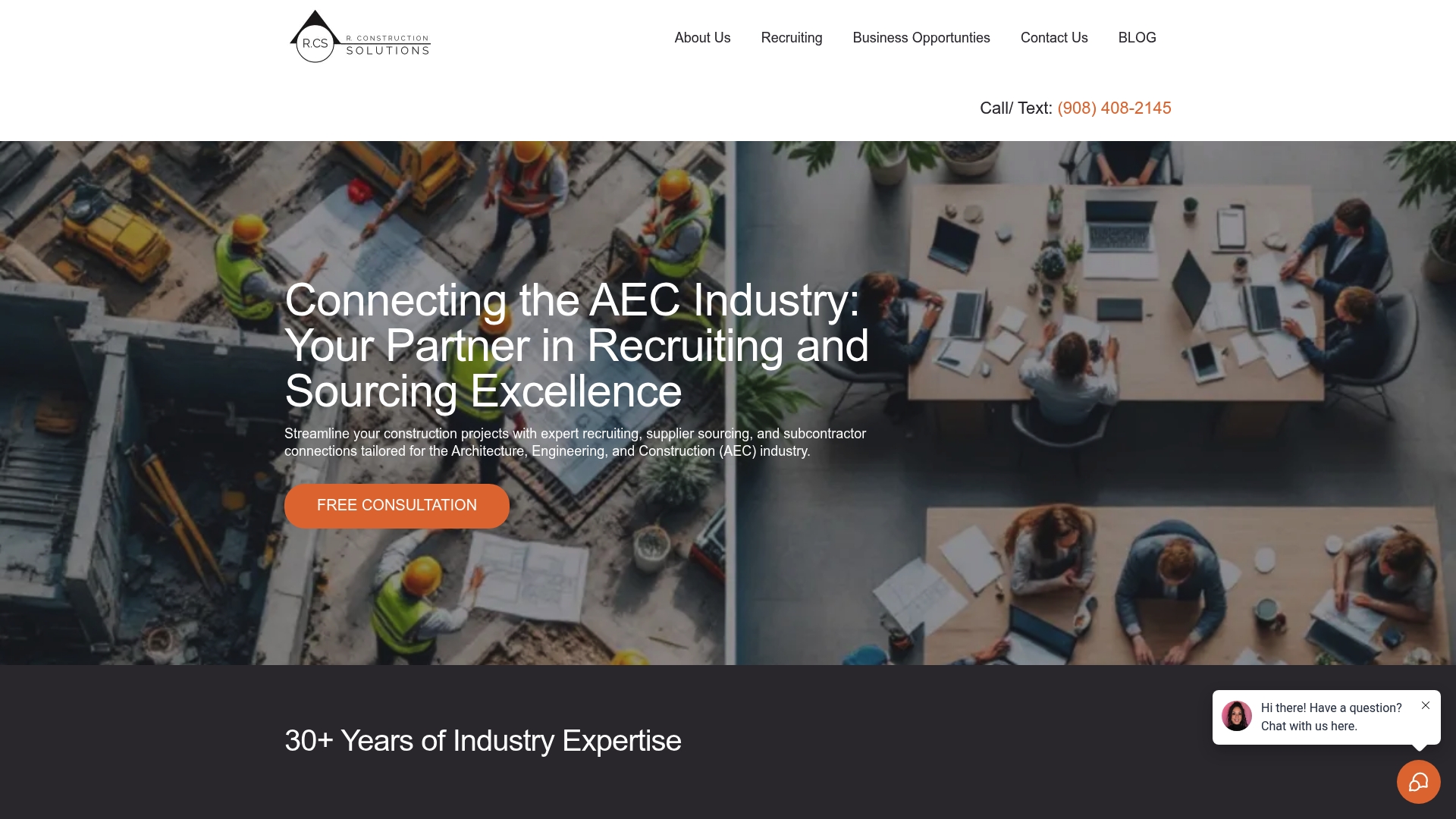
When your project schedule cannot absorb a six-week open search, Constructconnect-rconstructionsolutions offers a direct alternative: a pre-vetted network of AEC candidates, subcontractors, suppliers, and equipment vendors, sourced against your project’s specific outcomes and milestones. Lower commission rates and a prorated 90-day payment structure mean you pay for results, not effort. The replacement guarantee protects your schedule if a placement does not hold.
The next step is straightforward: schedule a 15-minute intake call, share your RFI, or request a quote through the AEC recruiting services page. Constructconnect-rconstructionsolutions will build your ICP and activate its pre-vetted network within 48 hours of intake.
FAQ
What is project-based staffing in construction?
Project-based staffing is the practice of sourcing and placing employees, subcontractors, suppliers, and equipment vendors aligned to specific project phases and milestones, rather than filling permanent open roles. Placements are scoped to the project’s duration and skill requirements.
How long does it take to fill a construction project role?
Time-to-fill ranges from one to two weeks for equipment vendors and field crews to two to five weeks for specialty subcontractors and project engineers, depending on the role’s complexity and the sourcing partner’s network depth.
What is a prorated placement fee?
A prorated fee divides the total recruiting commission across the first 90 days of a placement. If the hire exits before day 90, the client receives a refund proportional to the unused portion — for example, a day-30 departure returns 67% of the total fee.
How does Constructconnect-rconstructionsolutions vet candidates and vendors?
Constructconnect-rconstructionsolutions screens against an outcome-focused ICP built from your project scope, verifies certifications, insurance, and safety records, and confirms scope-specific references before presenting any candidate or vendor for your review.
What compliance documents should I require before a sub mobilizes?
Require a current general liability certificate with additional insured endorsement, workers’ compensation coverage, OSHA documentation, applicable trade licenses, bonding confirmation, and signed lien waiver agreements before the first day of work.
Useful sources
- ABC: Construction Industry Must Attract 349,000 Workers in 2026
- AGC: Construction Workforce Shortages Are Leading Cause of Project Delays
- AGC: 2025 Workforce Survey Analysis
- Daily Reporter: 2026 Construction Hiring and Business Outlook Report
- R. Construction Solutions: Recruiting Services
- R. Construction Solutions: Business Opportunity Sourcing
- Procore: Construction Recruitment Library