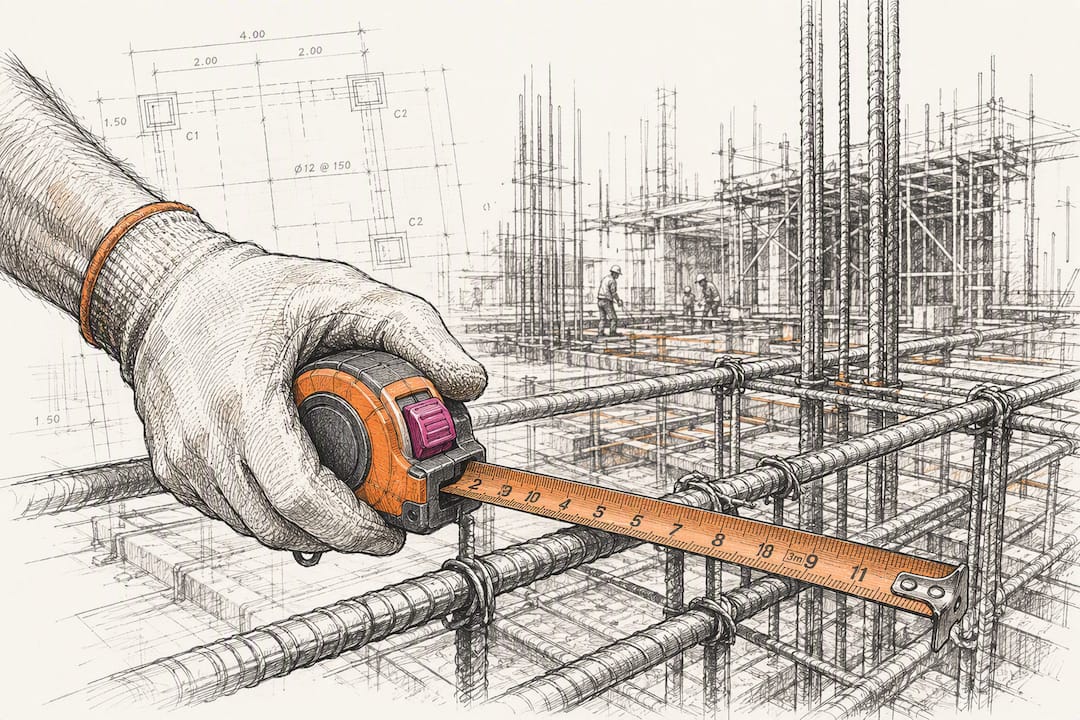
Stop FAR Audits: Supplier Diversity for U.S. Construction Contractors
Supplier diversity in construction means deliberately sourcing subcontractors, materials, and services from certified minority, women, veteran, and small businesses, and for most contractors it stops being optional the moment a federal construction contract crosses $2 million. That threshold triggers a subcontracting plan and ongoing eSRS reporting, as required by federal procurement regulations. Keep reading for what that plan needs to include and how to build a program that survives an audit.
TL;DR:
- Contractors must have a documented supplier diversity program that includes outreach efforts, pre-qualification processes, and tier-2 subcontractor reporting, especially for contracts over 2 million dollars.
- Federal rules require prime contractors to submit a subcontracting plan with specific goals and to file regular reports through eSRS, with the threshold for construction projects twice that of non-construction contracts at 2 million dollars.
- Building an effective program begins with auditing current spending, setting realistic, contract-specific goals, and establishing outreach channels that generate qualified diverse suppliers.
- Verifying supplier certifications from SBA or regional agencies is straightforward, but maintaining detailed outreach and bid records is crucial for audit defense and False Claims Act risk mitigation.
- Partnering with experienced sourcing firms can reduce lead times, ensure vendor qualification, and improve Tier-2 spend tracking, ultimately lowering project risk and supporting compliance.
Table of Contents
- What Are the Business Benefits of Supplier Diversity in Construction?
- What Federal and State Compliance Rules Apply to Construction Contractors?
- How Do You Build a Supplier Diversity Program in Five Steps?
- Which Certifications Matter and How Do Suppliers Get Certified?
- What Documentation Proves Good-Faith Compliance Efforts?
- How Do You Track Tier-2 Subcontractor Diversity Spend?
- What Mistakes Do Contractors Make With Supplier Diversity Programs?
- How a Sourcing Partner Supports Supplier Diversity Compliance
- The Compliance Gap Most Contractors Miss
- Get Supplier Diversity Support From ConneX by R. Construction Solutions
- Sources
- FAQ
What Are the Business Benefits of Supplier Diversity in Construction?
A wider supplier pool means more competitive bids, not just more paperwork. When you qualify additional subcontractors and material vendors, you get more pricing options on every scope, which matters when steel or specialty trades are tight in your market. Smaller, diverse firms often bring specialty skills or deep local market knowledge that larger regional players don’t bother developing, and that translates into fewer surprises on niche scopes.
The business case holds up under scrutiny. Industry analysis from the Associated General Contractors of America links stronger procurement ROI and market share growth to firms running structured diversity programs, not ad hoc outreach. Supplier diversity is also shifting from a compliance checkbox to a genuine competitive resource, particularly where diverse firms offer agility that larger subs can’t match on fast-moving schedules.
Three concrete advantages show up repeatedly:
- Broader bid pools reduce single-source pricing risk on scarce trades
- Local diverse suppliers often shorten mobilization time and reduce logistics costs
- Programs with documented outreach tend to score better on public-sector best-value evaluations
What Federal and State Compliance Rules Apply to Construction Contractors?
The trigger point is straightforward. Prime contractors holding an unclassified construction contract expected to exceed $2 million generally must submit a subcontracting plan with specific percentage goals and outreach commitments. That threshold is higher than the $900,000 mark that applies to non-construction unclassified contracts, so don’t assume your compliance team’s spreadsheet from the general services side applies to your jobsite.
FAR Subpart 19.7 spells out what the plan itself must contain: subcontracting goals by socioeconomic category, a description of outreach efforts, and a named individual responsible for administering the plan. Once the plan is approved, reporting doesn’t stop. Contractors file:
- Individual Subcontract Reports (ISRs) twice a year, tracking actual subcontracting activity by contract
- Summary Subcontract Reports (SSRs) annually, rolling up company-wide performance across all covered contracts
- Both filed through eSRS, the federal government’s electronic subcontracting reporting system
Statistic Callout: The construction-specific subcontracting threshold sits at $2 million, twice the $900,000 level that triggers plans on non-construction unclassified work, according to federal procurement guidance.
Layer on top of that the March 26, 2026 Executive Order, which added a flow-down clause requiring primes to push certain DEI-related compliance obligations onto subcontractors and expanded audit and False Claims Act exposure for firms that misrepresent their outreach or goal achievement. State programs add another layer entirely. Most state DOTs run their own DBE programs under 49 CFR §26, with separate certification rosters and goal-setting rules, so check your state’s transportation or general services agency before assuming federal certification covers you locally.
How Do You Build a Supplier Diversity Program in Five Steps?
Most contractors skip straight to setting a percentage goal, then wonder why they can’t hit it. The better sequence starts with knowing what you’re already buying.
- Audit your current spend. Pull Tier 1 subcontractor and vendor spend for the last two years, then estimate Tier 2 spend where subs report their own subcontractors. You can’t set a credible goal without a baseline.
- Set jurisdiction-aware goals. A federal highway job under DBE rules has different targets than a private commercial build. Match your goals to the actual contract type, not a company-wide average.
- Build outreach channels that actually produce leads. Certifier directories through the SBA, local minority and women’s business chambers, and regional trade shows tend to outperform cold web searches.
- Invest in supplier capacity. Mentorship programs, breaking large scopes into smaller bid packages, and connecting smaller firms with bonding assistance turn one-time vendors into repeat bidders. This is where pre-vetted subcontractor networks shorten the learning curve for both sides.
- Fix your procurement process. Add diverse-supplier pre-qualification steps, standardize solicitation templates so smaller firms aren’t buried in paperwork, and run commercially useful function (CUF) checks before counting a supplier toward your goal.
Pro Tip: Break one large scope into two or three smaller bid packages on your next project. It costs you almost nothing administratively and it’s often the single fastest way to qualify a new diverse subcontractor who couldn’t bond the full scope.
Which Certifications Matter and How Do Suppliers Get Certified?
Contractors juggling multiple certification types often waste time re-verifying suppliers who are already certified elsewhere. The main federal categories run through the SBA: 8(a) Business Development, Woman-Owned Small Business (WOSB), Service-Disabled Veteran-Owned Small Business (SDVOSB), and HUBZone. Separately, most states and regional agencies run DBE, MBE, and WBE certifications tied to specific procurement programs, often administered by a state DOT or a regional certifying partner like the National Minority Supplier Development Council.
Verification is simpler than most teams think:
- Confirm active registration and small-business status on SAM.gov
- Check state Small Business/Disadvantaged Business (SDO) rosters for DBE, MBE, or WBE status
- Search NMSDC’s directory for MBE-certified firms in your region
Quick checklist to hand a supplier: confirm entity ownership documentation, gather three years of financials if applying for 8(a), and apply through your state’s certifying agency at least 60 to 90 days before you need certified status for a bid.
What Documentation Proves Good-Faith Compliance Efforts?
Auditors care less about whether you hit a percentage goal and more about whether you can prove you tried. Documentation of good-faith efforts, including search logs, outreach records, and solicitation copies, is often what determines whether a contracting officer treats a missed goal as a minor issue or a real problem.
Keep these records in one searchable file per contract:
- Supplier search queries and the dates they were run
- Copies of solicitations sent to diverse firms, with response tracking
- Pre-qualification files and bid tabulations showing diverse suppliers were considered
- ISR filings every six months and the annual SSR rollup
Statistic Callout: Contractors that maintain a chronological outreach paper trail can mitigate penalties even when percentage goals are missed, according to compliance guidance built around eSRS reporting cycles. Weak documentation, combined with overstated diversity claims, is precisely the pattern that draws False Claims Act scrutiny under the expanded audit exposure introduced by the 2026 Executive Order.
How Do You Track Tier-2 Subcontractor Diversity Spend?
Most of your indirect diverse spend lives inside your subcontractors’ own supply chains, and it goes uncounted unless you ask for it directly. Require flow-down clauses in your subcontract agreements that obligate subs to report their own diverse-supplier spend on a simple monthly template, submitted alongside pay applications.
Counting rules matter here. Under 49 CFR §26.55, a certified DBE manufacturer counts 100% toward your goal, while a DBE acting as a regular dealer counts only 60%, and the firm must perform a commercially useful function, not just pass through paperwork, to count at all.
- Build a one-page Tier-2 reporting template your subs can fill out in five minutes
- Tie submission of that template to your monthly pay application process, not a separate annual ask
- Spot-check a sample of Tier-2 claims each quarter against invoices
Pro Tip: Ask subcontractors for Tier-2 diverse-spend numbers at the same time you collect their certified payroll. They’re already in reporting mode, and you’ll get far better response rates than a standalone request months later.
What Mistakes Do Contractors Make With Supplier Diversity Programs?
The most common failure is chasing a percentage number without doing the capacity-building work that makes hitting it possible. A goal without qualified suppliers behind it just produces last-minute scrambling at bid time.
- Don’t set aggressive goals before confirming enough certified suppliers exist in your market
- Do keep a dated, chronological outreach log from day one, not reconstructed after an audit request
- Do use pre-qualification screening so a supplier’s bonding or capacity gaps surface before bid day, not after award
- Don’t skip small administrative habits like timestamping solicitation emails and archiving certification copies. They’re what make a file audit-defensible
How a Sourcing Partner Supports Supplier Diversity Compliance
Building all of this internally takes time most procurement teams don’t have, which is exactly the gap a specialized AEC sourcing partner fills. Constructconnect-rconstructionsolutions brings 30+ years of AEC-specific sourcing experience, connecting contractors to pre-vetted subcontractor and supplier networks rather than starting outreach from zero.
- Pre-vetted networks cut the time spent verifying certification status and past performance
- A prorated commission model means you pay based on successful, sustained placements, not upfront retainer risk
- Established supplier relationships help populate Tier-2 reporting faster because the vetting groundwork is already done
Case examples and client outcomes are available on request through the recruiting services page.
The Compliance Gap Most Contractors Miss
Most advice on supplier diversity treats it as a goal-setting exercise: pick a percentage, announce it, chase it. That framing gets the order backwards. The research consistently points to documentation quality, not the goal number itself, as what actually protects contractors during an audit. A firm that misses its target but can show a dated outreach log, solicitation copies, and pre-qualification files is in a far better position than one that hit its number with sloppy records, especially now that the 2026 Executive Order has widened audit and False Claims Act exposure for primes.
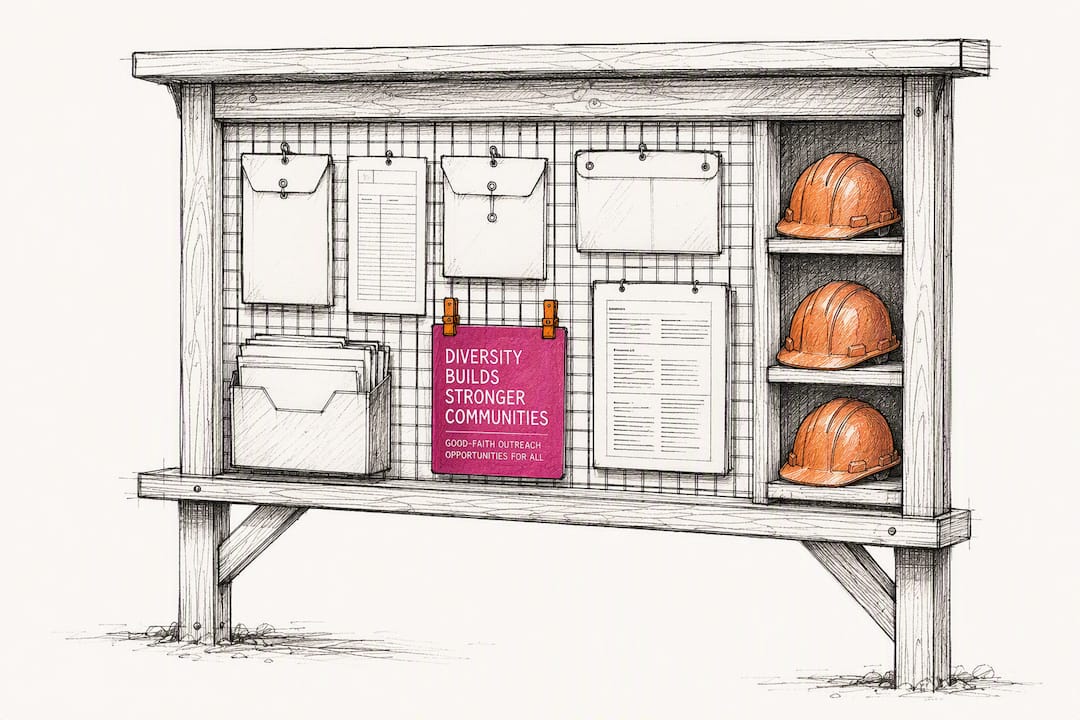
The conventional wisdom also underinvests in Tier-2 tracking. Everyone focuses on direct subcontractor spend because it’s easier to measure, but indirect diverse spend flowing through your subs is often larger and almost always undercounted. If you fix one thing this year, fix your flow-down reporting template before you touch your percentage goals.
Where a sourcing partner like Constructconnect-rconstructionsolutions genuinely earns its fee is in shrinking the time between “we need a certified supplier” and “we have a vetted one under contract.” That speed, not the percentage on a compliance report, is what actually reduces project risk.
— Rowena
Get Supplier Diversity Support From ConneX by R. Construction Solutions
ConneX is the alternative to building your supplier diversity program from a blank spreadsheet: instead of cold-calling certifier directories for months, you get access to a pre-vetted network of AEC subcontractors and suppliers built over 30+ years, plus a prorated commission structure so you pay based on successful placements rather than upfront fees.
That model maps directly onto the compliance work covered above. A pre-vetted supplier is one step closer to a documented, audit-ready file, and a faster placement means your Tier-2 reporting template gets populated sooner instead of sitting empty until year-end. Whether you need office staff, field personnel, or introductions to certified subcontractors and equipment rental partners, the sourcing legwork is already done before you make a call. If you want to see how pre-vetted sourcing fits into your current bid pipeline, visit the recruiting services page and request a conversation about your next project’s supplier needs.
Sources
- Heads of federal subcontracting threshold changes — Supply Chain (UCSF)
- Acquisition
- Whitehouse
- AGC report: business case for diversity and inclusion (AGC PDF)
FAQ
What Is the New Name for Supplier Diversity?
Many organizations now call this practice “inclusive sourcing” or “supplier inclusion” to reflect a broader focus on capacity-building alongside certification-based procurement, though “supplier diversity” remains the standard federal and industry term.
Should My Company Have a Supplier Diversity Policy?
If you hold or plan to bid on federal construction contracts over $2 million, a written policy is effectively required to support your subcontracting plan and eSRS reporting. Even outside federal work, a documented policy strengthens bids on state and private projects that score supplier inclusion.
Can You Give Me an Example of Supplier Diversity in Construction?
A general contractor breaking a large mechanical scope into three smaller bid packages so a certified WBE mechanical subcontractor can bond and bid one piece is a common, practical example. Pairing that supplier with a mentorship relationship on scheduling and safety compliance builds their capacity for larger scopes on future projects.
How Do I Obtain a Supplier Diversity Certificate?
Suppliers apply through the SBA for federal categories like 8(a), WOSB, SDVOSB, or HUBZone, or through their state’s certifying agency for DBE, MBE, or WBE status, typically submitting ownership documentation and financial records. Verification of any certification can be confirmed on SAM.gov or through the relevant state SDO roster before a contractor counts that supplier toward compliance goals.