Role of Subcontractor in Construction: 2026 GC Guide
A subcontractor is a licensed trade specialist hired by a general contractor (GC) to execute a defined scope of work within a larger construction project. The role of subcontractor in construction is to deliver technical expertise that no single GC workforce can replicate across every trade, from electrical and HVAC to structural steel and finish carpentry. Subcontractors contract directly with the GC, not the project owner, a legal structure called privity of contract that keeps accountability centralized. In 2026, with labor shortages tightening the market, understanding how subcontractors work is no longer optional for project managers. It is a core competency.
What are the responsibilities of subcontractors in construction?
Subcontractor responsibilities in construction span the full lifecycle of their assigned trade scope, from pre-construction planning through final inspection and system handover. This is not a support role. Subcontractors carry technical accountability that directly determines whether a project passes code, meets the schedule, and holds up under warranty.
Common trade categories and their core duties include:
- Electrical subcontractors: Rough-in wiring, panel installation, lighting systems, fire alarm rough-in, and final inspection sign-off with the authority having jurisdiction (AHJ)
- Plumbing subcontractors: Underground rough-in, above-slab piping, fixture installation, pressure testing, and health department inspections
- HVAC subcontractors: Ductwork fabrication and installation, equipment setting, controls wiring coordination, and TAB (testing, adjusting, and balancing) reports
- Drywall and framing subcontractors: Metal stud framing, sheathing, insulation, drywall hang and finish to specified level, and fire-rated assembly compliance
- Specialty subcontractors: Concrete, roofing, glazing, waterproofing, and low-voltage systems each carry their own licensing and inspection requirements
Every subcontractor is also responsible for OSHA compliance within their crew, including toolbox talks, personal protective equipment (PPE) enforcement, and incident reporting. The importance of subcontractors extends to quality control as well. Subs submit shop drawings, coordinate with inspectors, and produce as-built documentation that the GC assembles for the owner at closeout. A subcontractor who misses an inspection or fails a pressure test does not just slow their own work. They delay every trade that follows.
Pro Tip: Require each subcontractor to submit a written quality control plan before mobilization. This document should name the foreman responsible for inspections and list the specific hold points where GC sign-off is required before work proceeds.
How does subcontractor coordination work in project management?
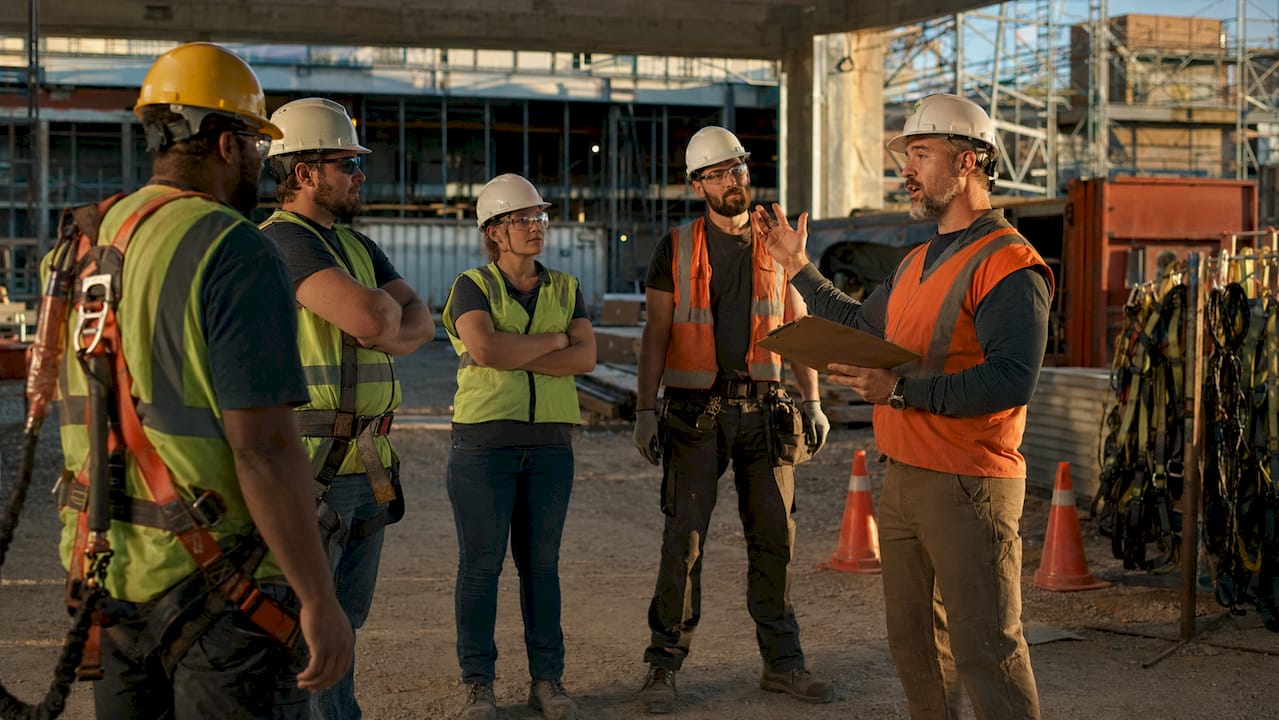
The role of subcontractor coordination sits at the center of every GC’s daily operation. Without a structured coordination system, even well-qualified subs produce schedule drift, rework, and cost overruns.
Here is how effective coordination works in practice:
-
Establish the GC as the single point of authority. GCs sequence trade work logically, maintain site safety, and handle all contract documentation. No sub should be receiving conflicting direction from the owner or designer without GC involvement.
-
Run weekly coordination meetings. Industry best practice calls for weekly meetings with written crew confirmations, typically held on Tuesdays, so that schedule adjustments can be made before the following Monday mobilization. Every trade foreman confirms crew size and arrival date in writing.
-
Maintain a rolling 3-week look-ahead schedule. This schedule shows what each trade is doing in the current week, the next week, and the week after. It surfaces conflicts before they become field problems. On projects over $10 million, dedicated coordination staff managing these schedules improve schedule adherence by up to 40%.
-
Separate the project manager role from the construction coordinator role. The project manager owns contracts, budgets, and owner relationships. The construction coordinator owns daily trade sequencing and conflict resolution. Mixing these roles on large projects is a common source of coordination failure.
-
Document every schedule change in writing. Verbal commitments between a superintendent and a foreman are not enforceable. Written confirmations protect both parties and create a paper trail for delay claims.
Pro Tip: Use Procore or a similar construction management platform to log all crew confirmations and schedule updates. A timestamped digital record is far more defensible than a text message chain when a delay dispute reaches the owner.
What are best practices for managing subcontractor contracts?
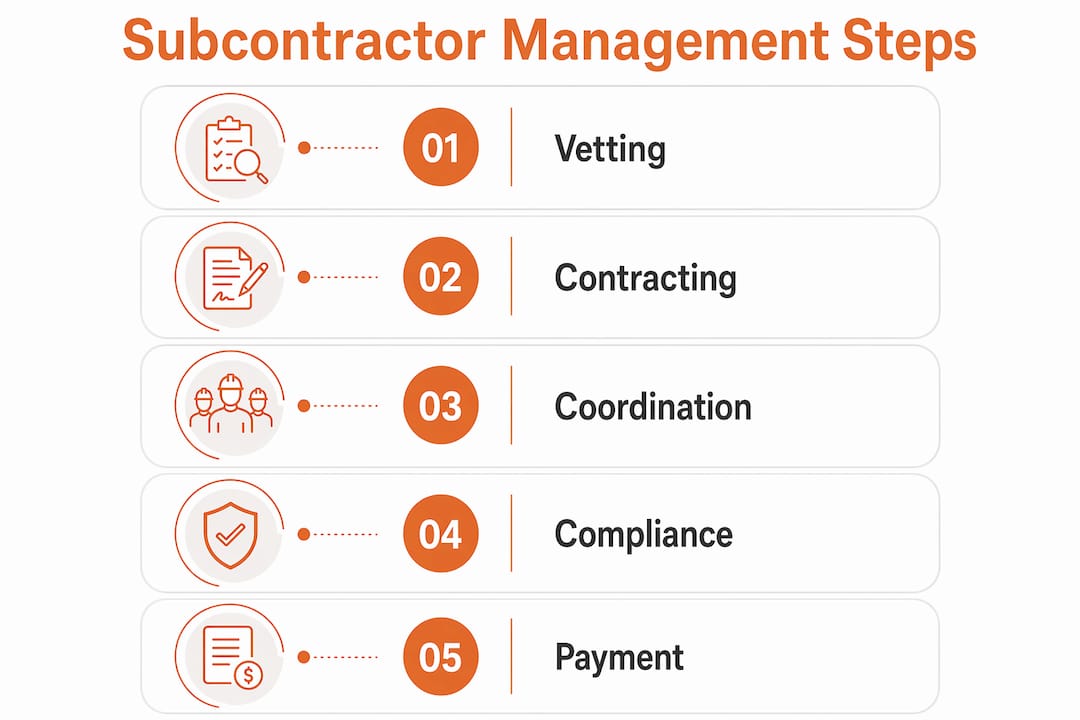
Managing subcontractor relationships well starts before the first shovel hits the ground. The vetting and contracting phase determines whether you build a reliable team or spend the project managing problems.
Vetting and bid leveling
Licensing, insurance certificates, and financial stability are the baseline. Beyond that, bid leveling is a critical step that many GCs skip. Bid leveling normalizes subcontractor proposals so you are comparing identical scopes. A low bid that excludes permit fees, equipment rental, or specific specification sections will cost more in change orders than the savings you captured at award. Build a bid comparison matrix for every trade package and require subs to confirm scope inclusions in writing before you level their number.
Reviewing a sub’s references from the last three projects is equally important. Ask the prior GC specifically about schedule reliability, crew quality, and how the sub handled scope disputes. A sub with a clean license and strong financials but a history of walking off jobs when payment slows is a liability you do not want on your project.
Flow-down contract provisions
Flow-down clauses require subcontractors to meet the same safety, quality, and dispute resolution standards as the prime contract between the GC and owner. These provisions are not optional language. They are the mechanism that makes your prime contract obligations enforceable down the chain. Every subcontract should include:
- OSHA 30 certification requirements for foremen
- Specific quality standards referenced in the project specifications
- Change order valuation rules that mirror the prime contract
- Dispute resolution procedures, including notice periods and documentation requirements
“Contract clarity on valuation rules for changes and extensions protects subcontractors’ payment rights and avoids disputes that erode trust and project momentum.” — Subcontractor contract disputes
Attracting and retaining top-tier subs
Labor shortages in 2026 have made reliable subcontractors a genuine competitive advantage. Top subs choose their GCs. They select partners with reputations for prompt payment, complete issued-for-construction (IFC) drawings, and schedules that respect their crews’ time. GCs who pay late, provide incomplete drawings, or change the schedule without notice get lower-tier crews assigned to their projects. That directly affects quality and schedule performance. You can learn more about qualifying subs before project start to build a roster of partners who will prioritize your work.
How does coordination quality affect project outcomes in 2026?
The connection between coordination discipline and project success is measurable. Poor coordination produces schedule drift, which compounds into rework, liquidated damages, and strained owner relationships. Strong coordination produces the opposite.
| Coordination Approach | Schedule Impact | Quality Impact | Subcontractor Relationship |
|---|---|---|---|
| Weekly meetings with written confirmations | Delays reduced significantly | Fewer missed inspections | Subs prioritize the project |
| Verbal-only scheduling | Frequent crew no-shows | Rework from sequencing errors | Subs treat the project as low priority |
| Rolling 3-week look-ahead in use | Conflicts caught before mobilization | Inspections pass first time | Foremen plan resources accurately |
| No look-ahead schedule | Trades stack on site, creating conflicts | Safety incidents increase | High sub turnover mid-project |
Treating subcontractors as expendable labor produces measurable negative outcomes. When a GC develops a reputation for poor coordination, top subcontractor firms assign their B-crews to that project and reserve their best foremen for GCs who run tight, respectful operations. The result is a self-reinforcing cycle. Poor coordination attracts weaker crews, which produces worse outcomes, which damages the GC’s reputation further.
Effective rolling look-ahead schedules with written commitments reduce field conflicts and schedule delays by keeping every trade foreman aligned on what is happening in the next three weeks. This is not administrative overhead. It is the mechanism that keeps a $20 million project from losing 60 days to sequencing failures. If you want to understand why delays happen even with good subs, the field guide on missed deadlines breaks down the root causes in detail.
Key takeaways
Subcontractors are the technical backbone of construction projects, and the GC’s ability to coordinate, contract, and partner with them determines project outcomes more than any other single factor.
| Point | Details |
|---|---|
| Subcontractors hold legal accountability | Subs contract through the GC under privity of contract, making the GC responsible for their performance to the owner. |
| Bid leveling prevents costly surprises | Normalizing subcontractor bids before award stops low-bid scope gaps from becoming expensive change orders. |
| Written confirmations protect schedules | Weekly crew confirmations in writing reduce schedule drift and create enforceable documentation for delay claims. |
| Flow-down clauses enforce prime standards | Subcontracts must mirror prime contract safety, quality, and dispute resolution requirements without exception. |
| Top subs choose their GCs | In the 2026 labor market, prompt payment and schedule reliability determine which GCs attract the best subcontractor crews. |
What i’ve learned about treating subs as strategic partners
After years of working inside the AEC industry, the pattern I see most often is this: GCs who struggle with schedule and quality problems almost always have a subcontractor relationship problem underneath. They treat subs as vendors to be managed rather than technical partners to be respected.
The GCs who consistently deliver on time have a different approach. They pay within the agreed terms without exception. They provide complete IFC drawings before mobilization, not during. They run Tuesday meetings that start and end on time, and they follow up every verbal commitment with a written confirmation before the day is out. These are not complicated practices. They are discipline.
I also believe strongly in dedicated construction coordinators on any project over $10 million. A superintendent managing 15 trades while also handling RFIs, owner walkthroughs, and safety inspections cannot give coordination the attention it requires. A coordinator whose only job is trade sequencing and look-ahead schedule maintenance pays for themselves in avoided delays within the first month.
The subcontractor scope of work conversation is where most disputes begin. Vague scopes, verbal-only commitments, and assumed inclusions are the three most common sources of subcontractor conflict I have seen. Write the scope clearly. Confirm it in writing. Then manage to it consistently.
Proactive subcontractor management is not a soft skill. It is a competitive advantage that shows up directly in your project delivery record.
— Rowena
How Constructconnect-rconstructionsolutions supports your subcontractor sourcing
Finding reliable, pre-vetted subcontractors is one of the hardest problems in construction project management, especially in a tight 2026 labor market. Constructconnect-rconstructionsolutions specializes in AEC industry recruiting that connects GCs and project managers with qualified trade professionals and subcontractor firms who are ready to perform.

With 30-plus years of AEC industry experience and a prorated payment structure that means you only pay for successful placements, Constructconnect-rconstructionsolutions removes the guesswork from subcontractor sourcing. Whether you need to fill a critical trade gap mid-project or build a reliable subcontractor roster before the next bid cycle, the team at Constructconnect-rconstructionsolutions delivers pre-screened candidates who meet your licensing, insurance, and experience requirements from day one.
FAQ
What is the role of a subcontractor in construction?
A subcontractor performs specialized trade work, such as electrical, plumbing, or HVAC, under contract with the general contractor. They are legally and technically accountable for their assigned scope, including inspections, code compliance, and system handover.
How do subcontractors differ from general contractors?
General contractors manage overall project coordination, owner relationships, and risk control. Subcontractors execute specific trade scopes under the GC’s direction, with no direct contractual relationship with the project owner under the privity of contract structure.
What should a subcontractor contract include?
Every subcontract should include flow-down provisions from the prime contract, OSHA certification requirements, change order valuation rules, and written dispute resolution procedures with specific notice periods.
How can gcs attract reliable subcontractors in 2026?
Top subcontractor firms select GCs based on payment history, schedule reliability, and drawing quality. Paying promptly, providing complete IFC drawings before mobilization, and running structured weekly coordination meetings are the most effective ways to earn preferred status with high-quality subs.
What is bid leveling and why does it matter?
Bid leveling normalizes subcontractor proposals to confirm that all bids cover identical scope items before award. Skipping this step allows low bids with missing scope to win work, which then generates costly change orders that exceed the original savings.