
Recruiting Construction Administrative Professionals: 2026 Guide
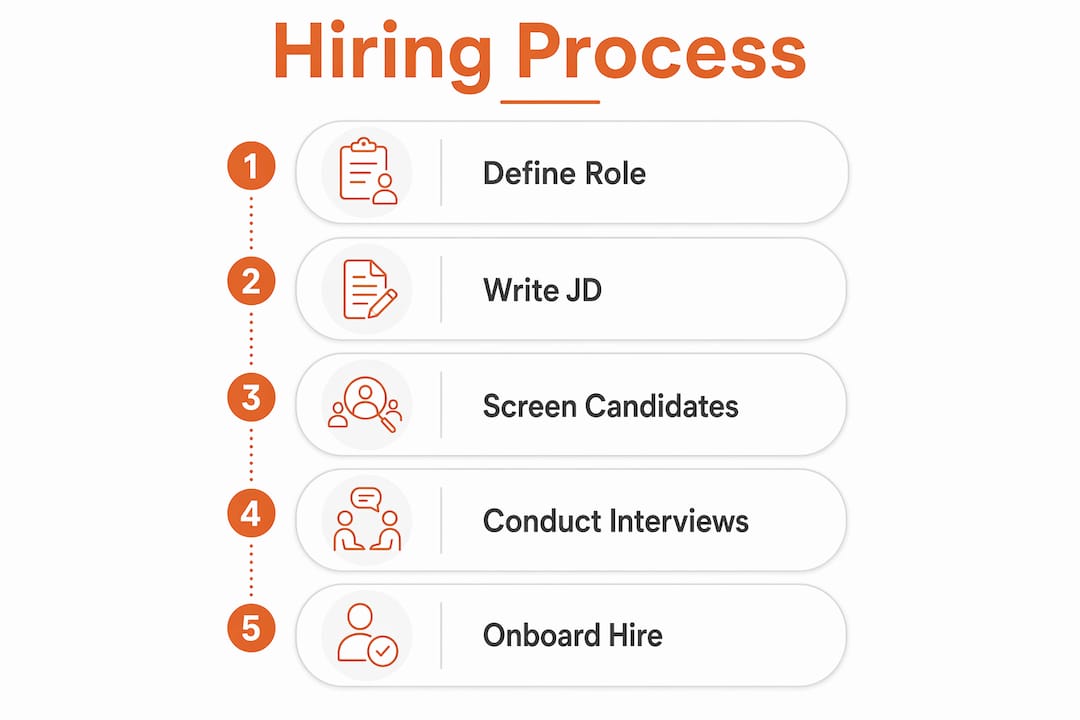
Recruiting construction administrative professionals requires a focused, systematic approach built on role clarity, structured evaluation, and industry-specific sourcing. The most effective hiring teams start by defining exactly what the role must accomplish within the first 90 days, then build every downstream step around those outcomes. Here is what that process looks like in practice:
- Define the role with SMART goals tied to real operational gaps, not a wish list of credentials
- Write targeted job descriptions that separate must-have qualifications from nice-to-haves
- Use standardized interview templates mapped to competencies, reducing unconscious bias
- Build a 30–60–90 day success map so candidates understand what winning looks like
- Source through construction-specific channels including AEC job boards and industry networks
- Partner with specialized recruiting services that understand Procore workflows, OSHA documentation, and subcontractor coordination
Table of Contents
- How to define the role and set goals for construction administrative hires
- Writing job descriptions that attract top construction admin candidates
- Using standardized interview templates to improve fairness and consistency
- Why specialized recruiting services improve construction administrative staffing
- Conducting behavioral and situational interviews for construction admin roles
- Assessing cultural fit within construction project teams
- Onboarding best practices for construction administrative professionals
- Constructconnect-rconstructionsolutions fills construction admin roles faster
- Key Takeaways
- FAQ
How to define the role and set goals for construction administrative hires
Vague role definitions produce vague candidates. Before posting a single job opening, collaborate with your project managers, superintendents, and department leads to identify the specific operational gap the hire must close. Is document control falling behind? Are RFI logs going untracked? Start with the problem, not the title.
Asana experts recommend setting SMART objectives: specific, measurable, attainable, realistic, and time-bound. Applied to construction office hiring, that means defining outcomes like “maintain a complete, audit-ready submittal log within 30 days” rather than “support the project team.”
- Identify 3–5 core competencies the hire must demonstrate within the first 90 days
- Map those competencies to daily workflows: change order tracking, meeting minutes, vendor coordination
- Confirm role scope with the hiring manager before writing the job description
- Build a 30–60–90 day success map that ties milestones to project phase deliverables
Pro Tip: Run a 30-minute kickoff meeting with the hiring manager before the role goes live. Document the answers. Teams that skip this step often discover mid-search that they were hiring for the wrong problem.
Writing job descriptions that attract top construction admin candidates
Your job description is the first filter, and most construction companies write them wrong. Overly long descriptions with 15 or more requirements push away qualified, diverse candidates who self-select out when they don’t check every box. Focus on what actually predicts success in the role.
Separate must-haves from nice-to-haves explicitly. A construction office coordinator needs strong document management skills, proficiency in Microsoft Office, and the ability to manage competing priorities on a fast-moving jobsite. Procore experience or familiarity with Yardi are genuine pluses, not barriers to entry.
- Lead with the role’s impact: explain how this position keeps the project running on schedule
- Include a 30–60–90 day success map to show candidates exactly what they’ll own and when
- Use inclusive language throughout: “project coordinator” not “project coordinator (he/she)”
- State your anti-discrimination commitment explicitly to signal a fair hiring process
- Post on construction-specific job boards alongside general platforms to reach relevant talent pools
Using standardized interview templates to improve fairness and consistency
Unstructured interviews are the single biggest source of mis-hires in construction office hiring. When every interviewer asks different questions and scores candidates on gut feel, hiring accuracy drops by 30–40%. Standardized templates fix that.
Greenhouse Senior Talent Planning Operations Manager Melissa Lobel explains that mapping specific decision signals to each interview stage keeps evaluations consistent regardless of which recruiter or hiring manager runs the search. For construction administrative roles, those signals might include how a candidate handles conflicting priorities from a superintendent and a project manager simultaneously.
- Build a question bank mapped to your 3–5 core competencies
- Use consistent scoring rubrics so all interviewers share a definition of “outstanding” vs. “borderline”
- Hold calibration sessions before interviews begin to align the panel on evaluation standards
- Avoid duplicate questions across interview stages to protect the candidate experience
- Respond to candidates within 48 hours at each stage; top candidates exit slow processes within 10 days
Pro Tip: For structured interview frameworks that reduce bias and increase consistency, the structured interview guide from Filmijob offers practical HR templates worth adapting for AEC roles.
Why specialized recruiting services improve construction administrative staffing
General staffing agencies can fill a desk. Specialized AEC recruiting services fill the right desk, faster, with candidates who already understand RFI logs, submittal schedules, and the pace of a live construction project. That difference shows up directly in retention and project execution.
Constructconnect-rconstructionsolutions brings 30+ years of AEC industry experience to every search, connecting clients with pre-vetted candidates who understand construction workflows from day one. Their prorated 90-day payment model means you pay only for successful placements, not for the search itself.
- Pre-vetted candidate pools reduce time spent screening unqualified applicants
- Deep market knowledge surfaces passive candidates who aren’t browsing general job boards
- Lower commission rates than traditional agencies keep hiring budgets manageable
- Industry-specific sourcing covers building project support roles from office coordinators to project administrators
- Reliable supplier and subcontractor networks reduce delays and improve overall project quality
Structured hiring systems that combine specialized sourcing, skills assessments, and behavioral rubrics reduce mis-hires by up to 40%.
Conducting behavioral and situational interviews for construction admin roles
Behavioral and situational questions reveal how a candidate actually operates under the conditions your project team creates every day. Behavioral questions (“Tell me about a time you managed conflicting document deadlines”) surface patterns from real experience. Situational questions (“What would you do if a superintendent needed a change order processed while you were mid-way through a submittal package?”) show how they’d handle scenarios they haven’t faced yet.

Google’s structured interviewing framework recommends assessing three dimensions: role-related knowledge, problem-solving, and leadership potential. For a construction office coordinator, role-related knowledge includes document control systems and contract administration basics. Problem-solving covers how they prioritize when three project managers need something simultaneously. Leadership potential, even for individual contributors, shows up in how they take initiative without being asked.
Write predetermined follow-up questions for each prompt. If a candidate’s initial answer is thin, follow-up questions like “Walk me through exactly how you organized that” or “What would you do differently now?” pull out the detail that separates a strong candidate from a polished one.
Assessing cultural fit within construction project teams
Cultural fit in construction administration is less about personality and more about how a candidate operates in a high-pressure, field-driven environment. An office coordinator who thrives in a quiet corporate setting may struggle when a superintendent walks in needing three things at once while a subcontractor is on hold.
Ask candidates directly about the environments where they do their best work. Probe for comfort with ambiguity, tolerance for interruption, and experience supporting tradespeople alongside white-collar project managers. The hiring for construction admin process should assess culture add, not just culture fit: you want someone who brings organizational discipline to a team that may currently lack it, not someone who simply mirrors the existing dynamic.
Involve a cross-section of the project team in the interview panel. A superintendent, a project manager, and an office manager will each surface different signals about how the candidate would actually function on site.
Onboarding best practices for construction administrative professionals
A strong hire can still fail if onboarding is disorganized. For construction administrative professionals, the first 30 days should focus on systems access, document control protocols, and relationship-building with the project team. Day one is not the time for a stack of HR paperwork and a laptop password.
Use the 30–60–90 day success map you built during recruiting as the onboarding roadmap. At 30 days, the new hire should have command of the filing system and meeting cadence. At 60 days, they should be managing routine correspondence and tracking logs independently. At 90 days, they should be a reliable point of contact for subcontractors and vendors. For additional onboarding frameworks, the employee onboarding guide from Filmijob covers integration steps that translate well to construction project environments.
Assign a dedicated onboarding contact, not just a general HR email. Construction projects move fast, and a new administrative hire who can’t get a quick answer on day three will lose confidence and momentum.
Constructconnect-rconstructionsolutions fills construction admin roles faster
Finding a construction office coordinator or project administrator who already understands Procore, change order workflows, and the pace of a live jobsite is genuinely hard. Constructconnect-rconstructionsolutions is built specifically for that search. With 30+ years of AEC industry experience and a pre-vetted candidate network, the team connects construction companies with administrative professionals who are ready to contribute from week one, not week eight.
The prorated 90-day payment model means you pay only when a placement succeeds. Commission rates run lower than traditional staffing agencies, and every candidate comes screened against the construction-specific competencies that actually predict performance. Whether you need a single office coordinator for a data center project or ongoing AEC recruiting support across multiple sites, Constructconnect-rconstructionsolutions has the market knowledge to move quickly and accurately. Contact the team today to discuss your current administrative staffing needs.
Key Takeaways
Recruiting construction administrative professionals works best when role clarity, structured evaluation, and AEC-specific sourcing operate together from the start.
| Point | Details |
|---|---|
| Define the role first | Identify 3–5 core competencies and build a 30–60–90 day success map before writing the job description. |
| Write focused job descriptions | Separate must-haves from nice-to-haves; overly long descriptions deter qualified, diverse candidates. |
| Standardize interviews | Without rubrics and calibration, hiring accuracy drops by 30–40% due to reliance on gut feelings. |
| Structured systems cut mis-hires | Combining structured interviews, skills assessments, and behavioral rubrics reduces mis-hires by up to 40%. |
| Constructconnect-rconstructionsolutions | Offers 30+ years of AEC recruiting experience with a prorated 90-day model and lower commission rates. |
FAQ
What qualifications should a construction administrative professional have?
Core qualifications include administrative experience, proficiency in Microsoft Office (especially Excel), strong document management skills, and familiarity with construction workflows. Experience with project management software like Procore is a genuine advantage.
How do standardized interview templates help in construction office hiring?
Standardized templates map questions to specific competencies and use consistent scoring rubrics, which prevents unconscious bias and keeps all candidates evaluated against the same signals. Without them, hiring accuracy drops by 30–40%.
Why use a specialized AEC recruiting service instead of a general staffing agency?
Specialized services like Constructconnect-rconstructionsolutions understand construction project demands, pre-vetted supplier networks, and the pace of field operations, which general agencies typically do not. That knowledge reduces time-to-fill and improves retention.
What should a 30–60–90 day plan include for a construction admin hire?
The plan should tie milestones to project phase deliverables: document control and system access at 30 days, independent log management at 60 days, and reliable subcontractor and vendor coordination by 90 days.
How quickly should hiring teams respond to construction admin candidates?
Top candidates exit slow processes within 10 days. Responding within 48 hours at each stage significantly improves offer acceptance rates and protects your employer reputation in the AEC market.