
90-Day No-Placement No-Fee for Contractors: Avoid OSHA and Tax Risk
No placement no fee means the employer pays only when a placement starts, with the fee prorated over a guarantee window, typically the first 90 days. It applies to contingency recruiting for office staff, field personnel, and subcontractor connections in AEC hiring, not to any arrangement involving worker-paid fees. If the hire quits or gets fired early, you get a partial refund or a free replacement search, not a sunk cost.
TL;DR:
- The prorated fee structure typically covers a three-month guarantee period, offering refunds or free replacements if the hire leaves early within that window.
- Contracts should specify whether “leaves early” refers to resignations, terminations, or both, and require the proration formula to be clearly documented upfront.
- Payment is usually triggered by the candidate’s actual start date, with net 30 or net 15 terms, which can impact cash flow if not aligned with project schedules.
- Safety training responsibilities remain with the host employer, who must ensure workers receive site-specific hazard orientation, regardless of staffing arrangements.
- When selecting a recruiter, contractors should verify candidate vetting procedures, insurance documentation, and references, especially for construction-specific skill and licensing requirements.
Table of Contents
- What Does No Placement No Fee Mean for Contractors?
- Common Recruiter Contract Terms Contractors Must Negotiate
- Tax and Worker-Classification Consequences Contractors Should Check
- Who Handles Safety Training for Staffed or Sourced Workers?
- How to Evaluate a No Placement No Fee Recruiting Provider
- Negotiation Playbook: Getting Better Terms in Writing
- Why a Construction Labor Shortage Makes Specialization Matter
- How R. Construction Solutions Builds No Placement No Fee Into Every Hire
- Sources
- FAQ
What Does No Placement No Fee Mean for Contractors?
The fee basis is almost always a percentage of the placed worker’s first-year base salary, not of total compensation with bonuses and per diem folded in. That distinction matters at contract signing because a recruiter quoting “total comp” on a $95,000 superintendent role with a $15,000 bonus target is charging you on $110,000, not $95,000.
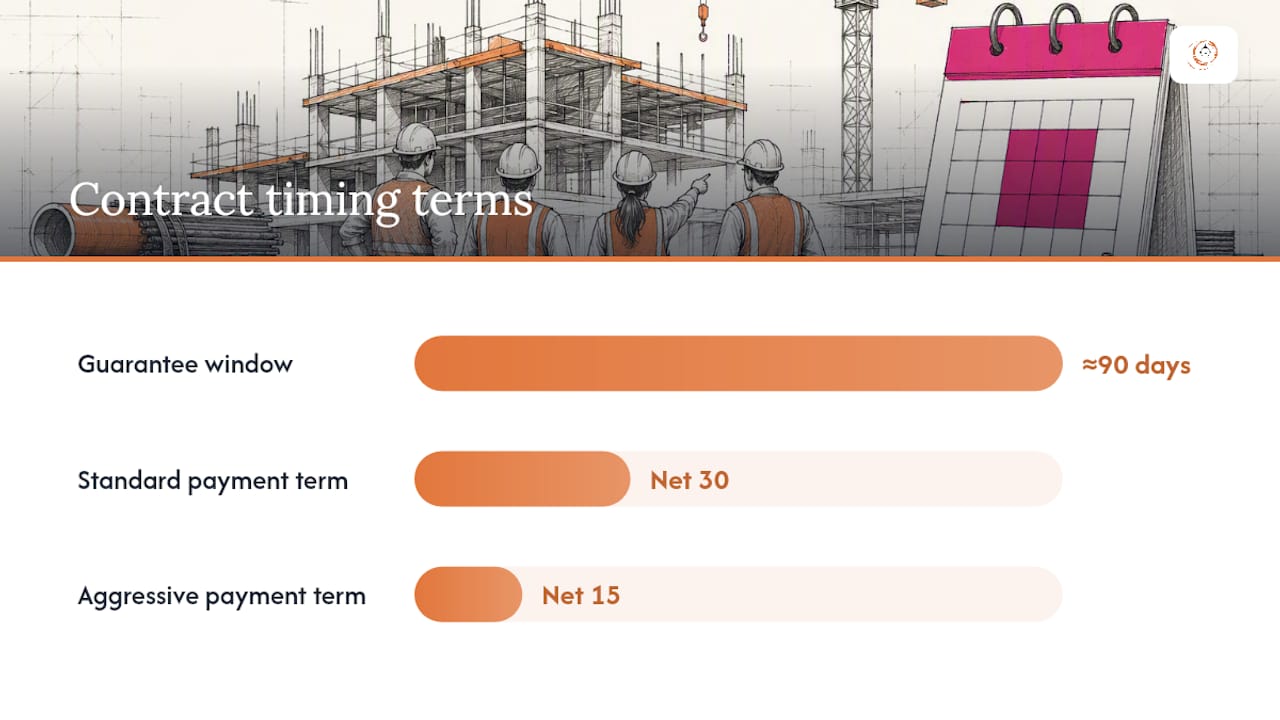
Payment triggers vary, but the strongest contracts tie invoicing to the candidate’s actual start date rather than an offer letter or verbal acceptance. Net 30 is standard; some agencies push net 15, which strains cashflow if you’re waiting on a draw request from the general contractor above you.
The guarantee window is where “no placement no fee” earns its name. A typical structure prorates the fee over a standard guarantee window of about three months: if a project engineer you hired through a recruiter leaves halfway through that period, you’re entitled to a proportional refund or a free replacement search, depending on the contract language.
- A fee prorated over the guarantee window refunds a calculated amount per day based on the total fee and the hire’s salary.
- If that hire leaves early in the guarantee period, you’d recover a substantial portion of the fee as a refund or credit toward a replacement search.
- Contracts differ on whether “leaves” means resigns, is terminated for cause, or both, so read that clause closely.
Contractors often assume “no fee unless placed” means no fee unless the hire stays permanently. It doesn’t. The fee is earned at placement; the guarantee window only protects you against an early failure, not a candidate’s long-term performance six months out.
Common Recruiter Contract Terms Contractors Must Negotiate
Every contingency agreement has four levers that decide how much risk you’re actually carrying, and most contractors sign without touching any of them.
- Fee rate and fee basis. Contingency fees commonly run in a 15% to 25% band of first-year base salary. Push for base-salary-only language and negotiate a point or two off the top for volume, especially if you’re filling multiple field roles across active projects.
- Payment trigger. Insist the invoice fires on the confirmed start date, not the offer date. A candidate can accept an offer and never show up to a jobsite.
- Guarantee and remedy. Decide upfront whether an early departure gets you a prorated refund, a free replacement search, or your choice of either. Replacement searches save cash but cost time on a project with a hard schedule.
- Ownership window and exclusivity. Ownership windows (often 6 to 12 months) determine whether a recruiter can claim a fee if you hire the same candidate later through a different channel. Applicant carve-outs protect candidates already in your own pipeline before the recruiter engagement started.
Pro Tip: Get the prorating formula in writing before you sign, not after a hire quits. Ask whether the agency counts calendar days or working days, since a 90-day window measured in business days runs nearly four calendar months.
Sample recruiting agreements commonly invoice on the placed worker’s first day of employment and spell out remedies for early exits in the same clause. If your agreement doesn’t do both, ask why.
Tax and Worker-Classification Consequences Contractors Should Check
Misclassifying a placed hire as a 1099 subcontractor when they function as a W-2 employee is one of the more expensive mistakes a busy contractor makes, and it usually happens by accident.
The IRS evaluates worker status using behavioral, financial, and relationship factors: who controls how the work gets done, who provides tools and covers expenses, and whether the relationship looks permanent. A superintendent you supervise daily, provide a truck to, and expect on-site 40 hours a week looks like an employee regardless of what the paperwork calls them.
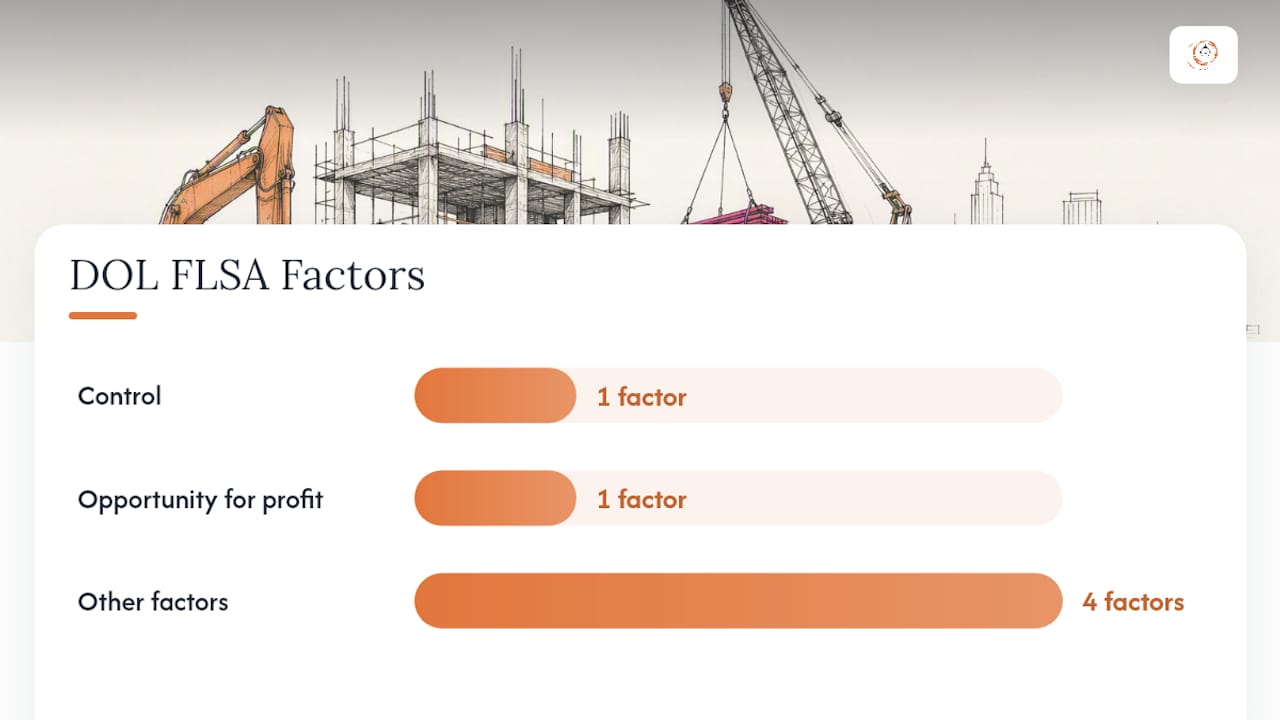
The Department of Labor applies a related but distinct standard. The DOL’s economic-reality test under the FLSA weighs six factors, with control and the worker’s opportunity for profit or loss carrying the most weight. Getting it wrong on either front triggers back withholding, FICA liability, unemployment insurance gaps, and potential audits.
- Request Form W-9 or SS-8 clarity in writing before the placement starts, not after a dispute arises.
- Document who supplies tools, sets the schedule, and directs daily tasks on the jobsite.
- If a role is genuinely project-based and independent, put that independence in the contract, not just in practice.
- Ask the recruiter directly whether they classify their own placements as W-2 or 1099, and confirm that matches your payroll setup.
Our guide to small contractor classification walks through these factors in more detail if you’re staffing across multiple states with different thresholds.
Who Handles Safety Training for Staffed or Sourced Workers?
Hiring through a recruiter doesn’t transfer your OSHA obligations. OSHA guidance is explicit that staffing agencies and host employers share responsibility for temporary worker safety, and the host employer, meaning you, the contractor running the jobsite, is generally best positioned to deliver site-specific hazard training before work begins.
Neither party can contract this obligation away; for insights on maintaining clean and safe environments, see our construction site cleaning guide. A clause in your recruiting agreement that says “the agency assumes all safety liability” doesn’t hold up if an OSHA inspector finds untrained workers on your site.
- Require documented proof of a competent-person assignment for any crew a supplier or recruiter places on your project.
- Ask for PPE compliance records and prior training certifications before the worker’s first day.
- Confirm who delivers site-specific hazard orientation, and put that assignment in writing.
- Check our OSHA training requirements guide for the specific standards that trigger mandatory training on active jobsites.
Practical verification beats trust here: walk a new hire through your site orientation yourself in the first hour, even if the recruiter swears they’ve already covered it.
How to Evaluate a No Placement No Fee Recruiting Provider
AEC hiring has enough specialized variables that a generalist staffing firm’s résumé screen isn’t enough. A 2025 AGC workforce survey found 57% of construction firms encountered candidates lacking essential skills or the right licenses, which usually traces back to shallow intake.
- Give the recruiter real project detail upfront: scale, shift pattern, travel radius, union or open-shop status, and required licenses or certifications.
- Ask for documentation of how they vet candidates, not just a promise that they do.
- Request certificates of insurance and at least two verifiable client references before signing anything.
- Treat vague answers about vetting process, missing insurance paperwork, or no references as immediate red flags.
- Confirm turnaround expectations and how fast a replacement search starts if a placement falls through.
If insurance documentation feels like a moving target, our subcontractor insurance verification guide breaks down what to request and how fast you should get it back.
Negotiation Playbook: Getting Better Terms in Writing
Five levers move the economics of a contingency contract more than anything else: fee rate, fee basis, guarantee structure, ownership window, and exclusivity.
- Ask for a volume discount if you expect to fill more than two or three roles in a year with the same recruiter.
- Trade a shorter exclusivity period for a slightly higher fee rate if you want to run parallel searches.
- Get the prorated refund formula spelled out in dollars, not percentages, using an example tied to your actual salary range.
- Confirm invoicing and net terms line up with your accounts payable cycle before the contract is signed, not after the first invoice arrives.
Pro Tip: Route the draft agreement through whoever handles your AP workflow before you sign. A net-15 trigger tied to start date can catch a project accountant off guard if draws from the GC run on a longer cycle.
Our construction recruiting cost reduction guide covers additional levers if you’re negotiating multiple placements at once.
Why a Construction Labor Shortage Makes Specialization Matter
Demand pressure is real: ABC estimates the industry needs a very large number of net new workers in 2026 consistent with high demand pressure., and AGC found 92% of hiring firms struggled to recruit qualified workers. Against that backdrop, a generalist staffing firm without construction-specific intake often produces mismatches: candidates missing licenses, wrong equipment certifications, or no tolerance for the travel radius your projects demand.
A specialist recruiter with 30-plus years in AEC hiring, a prorated 90-day billing structure, and a pre-vetted subcontractor network reduces that risk before it hits your jobsite. Before trusting any provider’s specialty claim, ask for sample placements in your trade, references from similar-scale projects, and a written breakdown of how they screen for licenses and safety credentials.
— Rowena
How R. Construction Solutions Builds No Placement No Fee Into Every Hire
This recruiting provider offers a lower commission and a prorated 90-day billing structure so you only pay in full for placements that actually stick. That structure covers office staff, field personnel, subcontractor connections, and supplier sourcing, supported by extensive experience in construction-specific placements.

The first engagement typically starts with an intake call covering project scale, licensing requirements, safety credentials, and schedule, followed by an exchange of documentation on insurance and vetting standards before candidates are presented. If a placement doesn’t work out inside the 90-day window, the prorated model means you’re not stuck absorbing a full fee for a hire that didn’t last. Visit the Recruiting Services page to see how the fee structure works for your next hire, or reach out for a sample contract and quote before your next project deadline forces a rushed decision.
Sources
- OSHA standard interpretations: staffing agencies and host employers
- IRS guidance on subcontractor vs employee classification
- DOL FLSA misclassification rulemaking FAQs
- How to negotiate recruiter fees in a contingency contract — ISG Partners
FAQ
What Does “No Placement No Fee” Mean in Recruiting?
It means the hiring company pays a recruiting fee only after a candidate is placed and starts work, with the fee often prorated over a guarantee window such as the first 90 days. If the hire leaves early, the contract typically provides a partial refund or a free replacement search.
What Is a Typical Contingency Recruiting Fee?
Contingency fees for construction and AEC roles commonly fall between 15% and 25% of the placed worker’s first-year base salary. The exact rate depends on role difficulty, exclusivity terms, and volume of placements with the same recruiter.
Does R. Construction Solutions Use Prorated Billing?
Yes, R. Construction Solutions structures its recruiting fees around a 90-day prorated model, so clients only pay for successful placements. Pricing details are available directly through the Recruiting Services page.
Who Is Responsible for Safety Training on a Staffed Worker?
The host employer, meaning the contractor running the jobsite, is generally responsible for delivering site-specific hazard training even when the worker was placed through a staffing agency or recruiter. OSHA guidance confirms this responsibility is shared and cannot be contracted away entirely.
How Do I Know if a Placed Worker Should Be a 1099 or W-2?
The determination depends on who controls the work, who provides tools, and how permanent the relationship looks, using IRS behavioral and financial factors alongside the DOL’s economic-reality test. When in doubt, filing Form SS-8 with the IRS gets you an official determination before disputes arise.