
349,000 Workers In 2026: 90 Day Playbook to Protect Construction Bids
Associated Builders and Contractors puts the 2026 gap at 349,000 net new workers, and much of that figure reflects retirements rather than new project growth. The single most urgent move for employers is folding workforce availability directly into bidding decisions and treating hiring and retention as a preconstruction discipline, not an HR afterthought. The evidence behind that call comes from ABC, the AGC/NCCER 2026 Workforce Survey, BLS employment data, and ADP’s research on pay and age trends across the trades.
TL;DR:
- The 2026 construction labor shortage primarily stems from retirements, with 349,000 net new workers needed, mostly to replace those leaving the workforce.
- Over 87% of firms report difficulty filling open positions, and 42% already face project delays due to staffing shortfalls.
- Regional disparities and high-demand sectors like data centers intensify shortages, even when national figures seem manageable.
- Wage inflation, subcontractor scarcity, and slow training pipelines significantly increase project costs and schedule risks if unaddressed.
- Immediate hiring strategies include referral bonuses, digital outreach, and vetting subcontractors, while workforce planning should be integrated into bid and project management.
Table of Contents
- What Do the 2026 Labor Shortage Numbers Actually Show?
- Why Is the Construction Workforce Shrinking in 2026?
- How Is the Labor Shortage Affecting Bids, Schedules, and Costs?
- What Should Employers Prioritize First in 2026?
- How Do You Build Workforce Risk Into Your Bids?
- What Could Change Between Now and 2027?
- A 90-Day Starter Plan for Building Your Bench
- Why Workforce Planning Can’t Stay a Back-Office Function
- How R. Construction Solutions Fills Your Gaps Faster
- Sources
- FAQ
What Do the 2026 Labor Shortage Numbers Actually Show?
The headline figure gets repeated everywhere, but the number that matters more to you is what’s inside it. ABC’s model converts projected construction spending into worker demand, then layers in current job openings, unemployment levels, and projected retirements to arrive at 349,000 workers needed in 2026. A large share of that is replacement demand, not incremental growth, which changes how you should read it. A softer spending outlook doesn’t mean the shortage is easing; it means fewer new hires are needed on top of a workforce that’s still retiring out the door at the same pace.
Analysis from ENR frames this well: the lower 2026 estimate compared to prior years reflects slower spending, not a structural fix. Specialty trades tied to data centers and industrial megaprojects remain tight regardless of the national trendline.
The AGC/NCCER 2026 Workforce Survey backs that up with firm-level reporting. It found that 87% to 90% of firms report difficulty filling open positions, and 42% say workforce shortages have already delayed projects. That’s not a soft-market footnote. It’s the leading operational risk contractors are naming themselves.
Here’s how the core metrics fit together for planning purposes:
- ABC’s 349,000 figure tells you the scale of the national gap and how much of it is retirement-driven versus growth-driven.
- AGC/NCCER’s 42% delay rate tells you how often shortages are already translating into missed schedules.
- BLS JOLTS data on construction job openings, hires, and quits tells you whether tightness is easing or worsening month to month.
- ADP’s trade-level pay and age data tells you which recruiting tactics will actually land with the workers you need.
Statistic Callout: Nearly nine in ten construction firms surveyed for the 2026 AGC/NCCER Workforce Survey report difficulty filling open positions, and 42% say the shortage has already caused project delays.
ADP’s July 2026 research adds a wrinkle worth watching closely: the median age in several key trades has dropped by up to five years since 2020, which means pay alone is no longer the deciding factor for a growing share of your candidate pool. Younger entrants are weighing career roadmaps, benefits, and how modern the hiring process feels.
Use BLS JOLTS releases as your monthly pulse check, the AGC survey as your annual benchmark against peer firms, and ADP’s trend data as your guide for adjusting recruiting tactics to suit your applicant pool.
Why Is the Construction Workforce Shrinking in 2026?
The 2026 shortage isn’t one problem. It’s five overlapping pressures, some fixable in a quarter and some that will take years to move.
- Retirements are outpacing replacements. A large chunk of the skilled trades workforce that entered construction in the 1980s and 1990s is aging out, and ABC’s model treats this as the dominant driver of the 349,000 figure.
- Data centers and megaprojects are pulling scarce trades. Electricians, pipefitters, and other specialty crafts are being drawn toward high-budget, high-priority builds, leaving smaller regional projects short even when the national numbers look manageable.
- Immigration enforcement activity has tightened labor supply in trades and regions that have historically relied heavily on immigrant labor, adding friction to an already constrained pipeline.
- The training pipeline can’t scale fast enough. Apprenticeship programs take years to produce a fully credentialed worker, and enrollment growth hasn’t kept pace with the volume of retirements.
- Regional and occupational intensity varies sharply. A shortage that looks moderate at the national level can be severe in a specific metro or trade, particularly where data-center construction is concentrated.
That regional unevenness is the detail most national headlines miss. Two firms in the same state, one bidding office buildings and one bidding data-center infrastructure, can be living in completely different labor markets right now.
How Is the Labor Shortage Affecting Bids, Schedules, and Costs?
Every one of the pressures above eventually shows up on a project schedule or a bid sheet. Here’s where to look first.
- Wage inflation erodes margin faster than material costs do. If your estimating team is still pricing labor off last year’s rates, you’re underbidding the job before it starts. Build in current wage trends by trade and region, not a flat escalation percentage.
- Labor float needs to be priced, not assumed. Crews shift between projects when a bigger job pays better or starts sooner. Treat labor availability as a line-item risk with its own contingency, the same way you’d price weather delays.
- Schedule delays cascade. When one trade falls behind because a crew got pulled to a higher-priority job, every trade scheduled after it slips too. The 42% of firms reporting shortage-driven delays are almost never dealing with an isolated hiccup.
- Turnover costs more than retention. Replacing a mid-career superintendent or a licensed electrician costs far more in lost productivity, rehiring, and training than a retention bonus or a schedule accommodation would have.
- Subcontractor scarcity creates chain-reaction risk. When your subs are stretched thin, you inherit their staffing gaps as scheduling gaps, and disputes over missed milestones become more likely. Vetting subs before you need them, not after a schedule slips, is worth building into your onboarding process.
What Should Employers Prioritize First in 2026?
Not every fix belongs on the same timeline. Some of these you can start this week. Others take a full budget cycle to pay off.
Immediate tactics (0 to 90 days):
- Launch or refresh a referral bonus program, tied to a retention milestone rather than a start date, since staged payouts reduce fraud and improve quality.
- Run targeted digital outreach on the platforms your ideal candidates actually use, rather than relying solely on job boards.
- Build a veteran transition pipeline; military experience translates well to field leadership and safety-focused roles.
- Watch for layoffs or slowdowns at competing firms in your market and move quickly when good people become available.
Mid-term investments (3 to 12 months):
- Commit to apprenticeship slots now, since apprenticeships remain the highest-leverage long-term fix even though they take years to mature.
- Pair new hires with structured mentorship, not informal shadowing, so skill transfer is measurable.
- Build a time-phased training plan that maps who needs to be certified, licensed, or promoted by which quarter.
Recruiting process modernization:
Digital-first onboarding isn’t optional anymore. ADP’s research is blunt about this: the workforce entering the trades is younger and evaluates employers the way they’d evaluate any other job offer, which means a slow, paper-based hiring process costs you candidates before they ever see a paycheck. Skills-based screening, shorter interview loops, and faster offer turnaround all matter more than they did five years ago. If your current process was designed in 2015, it’s worth revisiting the whole recruiting workflow, not just the job posting.
Compensation beyond base pay:
Schedule flexibility, transparent benefits, and a real learning and development stipend are increasingly deciding factors for candidates weighing two similar offers. A slightly lower hourly rate with a clear path to certification and leadership can beat a marginally higher rate with no roadmap.
Using contingency staffing partners wisely:
When you need to fill a role fast, a contingency recruiting model means you’re not paying retainer fees for candidates who never materialize. Set clear expectations upfront on timeline, fee structure, and what “successful placement” means so there’s no ambiguity when the invoice arrives.
Productivity tools that ease headcount pressure:
Scheduling software, field-data apps, and prefabrication all reduce how many bodies you need on-site to hit the same milestones. None of them replace skilled labor, but they buy you breathing room while your hiring pipeline catches up.
Pro Tip: Structure referral bonuses in two payments: half at the new hire’s start date, half at their 90-day mark. This single change filters out referrals made just to collect a check and rewards the ones who actually stick.
How Do You Build Workforce Risk Into Your Bids?
The firms getting burned in 2026 aren’t the ones facing a shortage. Every firm is facing that. They’re the ones who bid a job assuming labor would show up on schedule, then found out the hard way that it wouldn’t.
Before you submit a bid, run through a short validation checklist:
- Confirm subcontractor crew availability in writing, not a verbal assurance from three months ago.
- Check your internal bench strength against the project’s actual start date, not the date you hope it starts.
- Identify your hire windows: how long would it realistically take to staff a gap if one opened mid-project?
- Price labor float as its own contingency line, separate from general project contingency.
Integrating this validation into preconstruction rather than treating it as a hiring department’s problem is the difference between a bid that holds and one that erodes margin by month three. On the contract side, negotiate for labor escalation clauses or shared-risk language on projects with long lead times, especially in trades where you know regional demand is spiking. And build a real decision rule for walking away: if you can’t staff a job reliably at the price being offered, turning it down is cheaper than the penalty clauses and reputational damage that come from missing a completion date. A time-phased workforce plan tied to preconstruction makes that decision a lot easier to make with confidence instead of guesswork.
What Could Change Between Now and 2027?
Three scenarios are worth planning around, and none of them let you off the hook on hiring discipline.
Base case: ABC’s 349,000 estimate holds roughly steady, with replacement demand dominating and specialty trades tied to data centers staying tight regardless of broader market softness. Employers who’ve already built referral pipelines and apprenticeship commitments are positioned to absorb this without a scramble.
Soft-demand case: Overall construction spending cools further, reducing the incremental hiring need, but retirements keep happening on the same schedule. You still need to replace departing workers even if you’re not scaling headcount.
Rebound case: Interest rates ease and megaproject announcements accelerate, spiking demand faster than the pipeline can respond. Firms that kept their apprenticeship commitments alive during the soft period, rather than cutting them, will have bench strength ready to deploy.
Watch these indicators to know which scenario you’re heading into:
- Monthly BLS JOLTS releases for construction job openings and quits.
- New megaproject and data-center announcements in your region.
- Interest rate moves affecting commercial and residential starts.
- AGC’s quarterly survey updates on firm-level hiring difficulty.
A 90-Day Starter Plan for Building Your Bench
You don’t need a twelve-month strategy document to start closing your gap. You need three months of focused action.
- Weeks 1 to 2: Launch a staged referral program with a 90-day retention payout. Audit your current job postings for outdated language or unrealistic requirements that are filtering out qualified candidates.
- Weeks 3 to 6: Open three sourcing channels simultaneously: employee referrals, targeted digital outreach, and a veteran transition partnership. Fix the slowest step in your onboarding process, usually background checks or credential verification.
- Weeks 7 to 12: Commit to a specific number of apprenticeship slots for the coming year and set a bench-building target tied to your busiest anticipated season.
Each quarter after that, revisit apprenticeship commitments, roll out one new productivity tool, and measure your bench against upcoming project pipeline.
R. Construction Solutions works this from the recruiting side under a contingency model, meaning fees are prorated over the new hire’s first 90 days and paid only on a successful placement.
Pro Tip: Set your referral screening criteria before you launch the program, not after the first candidate arrives. A simple checklist covering required certifications, minimum experience, and safety record keeps referrals consistent and defensible.
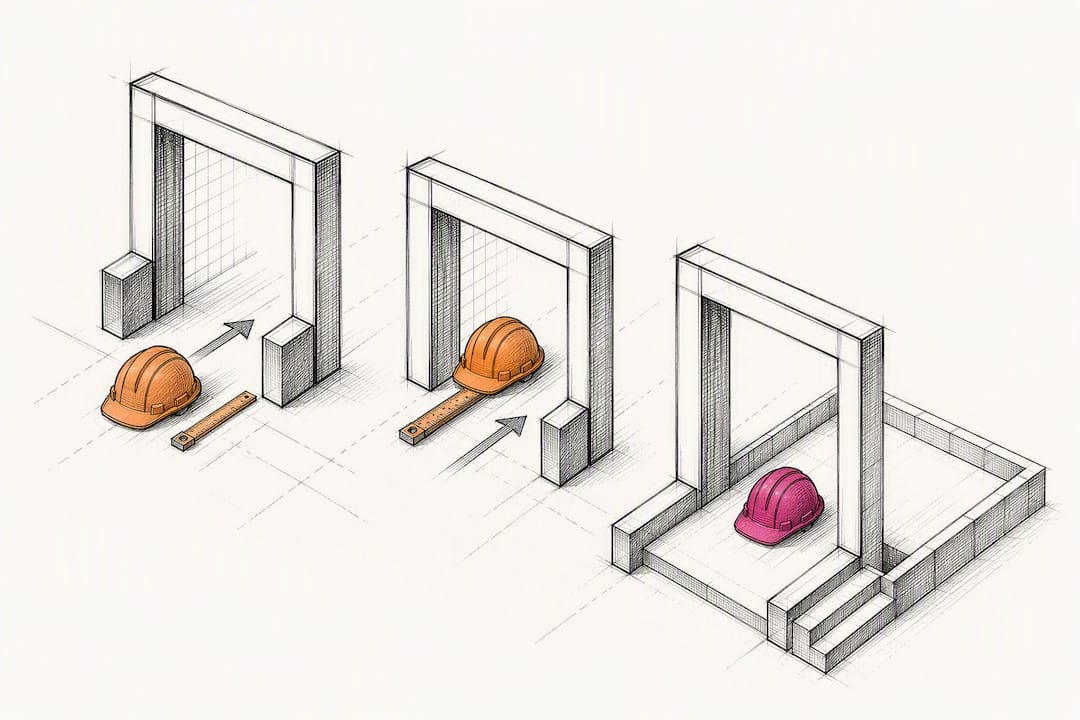
Why Workforce Planning Can’t Stay a Back-Office Function
The data in this article makes one thing clear to me: firms treating hiring as a reactive function are going to keep losing bids to firms that treat it as a planning input. The 349,000 figure isn’t a distant macro statistic. It’s a preview of which of your competitors will be understaffed on their next big job, and which ones will have already locked in their crews. Workforce planning belongs in the same room as your estimating team, not in a separate department that gets consulted after the bid is already submitted.
— Rowena
How R. Construction Solutions Fills Your Gaps Faster
A recruiting and sourcing service offers a lower-cost alternative to the flat retainer fees most staffing agencies charge, whether you’re filling a superintendent role tomorrow or building a pipeline of pre-vetted subcontractors for future projects.
With extensive experience in AEC recruiting, the service connects clients to pre-vetted candidates and subcontractors while charging on a contingency basis, prorated across the new hire’s first 90 days, so you’re never paying for a placement that doesn’t work out. An initial engagement typically starts with a role or sourcing gap to fill, whether office staff, field personnel, or supplier connections, moving toward a shortlist of vetted candidates or partners without upfront retainer costs common elsewhere in the industry. If your bid pipeline for 2026 depends on having crews and subcontractors lined up before you sign a contract, visit the recruiting services page to see how an engagement works and get a fee structure tailored to your open roles.
Sources
- ABC: Construction industry must attract 349,000 workers in 2026 despite macroeconomic headwinds
- Construction workforce shortages remain acute despite ‘soft’ market conditions
- Job Openings and Labor Turnover — JOLTS (construction series)
- The HR trends shaping the construction industry in 2026 | ADP
FAQ
How Bad Is the Construction Worker Shortage Right Now?
It’s severe by any firm-level measure: the 2026 AGC/NCCER survey found 87% to 90% of firms struggle to fill open positions, and 42% report the shortage has already delayed projects.
Will There Be a Labor Shortage in the US in 2026?
Yes. ABC estimates the industry needs 349,000 net new workers in 2026, with much of that demand driven by retirements rather than new project growth.
Will Construction Material Costs Go Down in 2026?
Material costs are a separate issue from labor availability and vary by product and supply chain, but even where material costs ease, labor shortages and wage pressure can still keep total project costs elevated.
Which Construction Companies Are Struggling Most With This Shortage?
Firms competing for specialty trades tied to data centers and other megaprojects face the tightest local labor markets, since demand concentration in those sectors pulls skilled workers away from smaller regional projects.
What’s the Fastest Way to Fill an Open Role in 2026?
Referral programs and targeted digital outreach tend to fill roles fastest, and a contingency recruiting partner can accelerate this further by sourcing pre-vetted candidates without requiring an upfront retainer.