
Why GCs Need Subcontractors After Award: A Field Guide
Subcontracting after contract award is the process by which a general contractor converts bid decisions into legally binding agreements with specialized trades, locking scope, price, and terms before construction begins. This phase, known in the industry as the buyout process, is where project margins are won or lost. Understanding why GCs need subcontractors after award goes beyond labor procurement. It is about risk management, legal enforceability, and cost control across every trade on the project.
What is the buyout process and why is it critical after award?
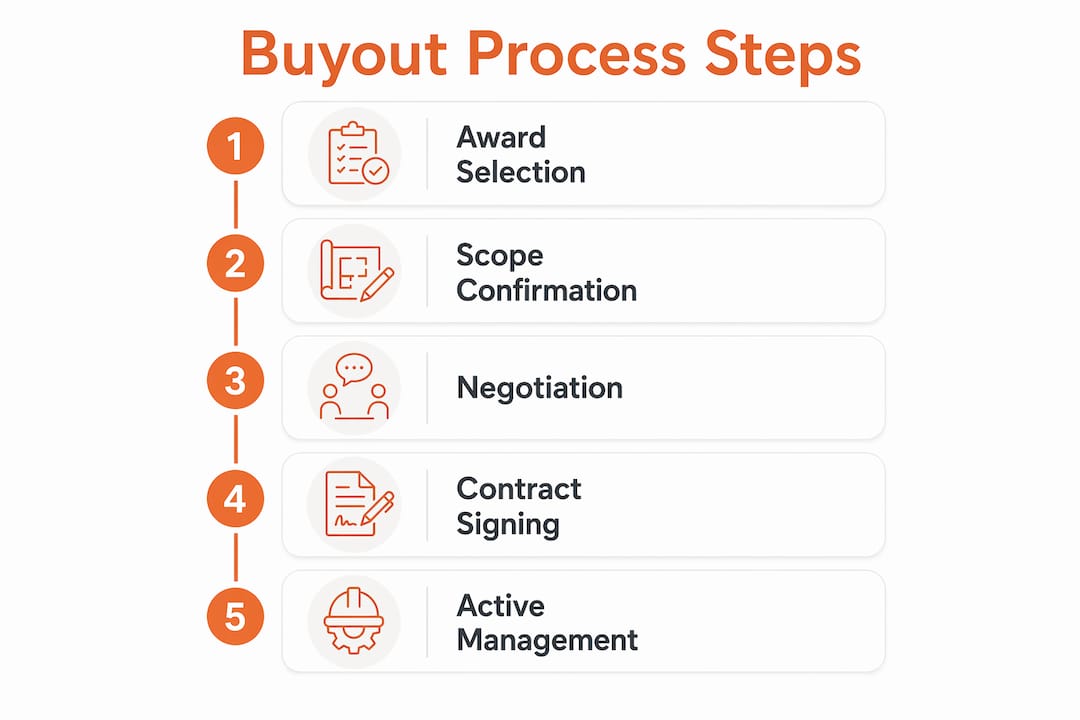
The buyout process is the structured transition from award decision to signed subcontract. It is not the same as bid leveling. Bid leveling normalizes scope across competing bids before a GC selects a winner. Buyout is the execution step that follows. It converts that selection into a signed agreement with agreed terms, confirmed pricing, and a defined scope of work.
Buyout quality directly impacts project margin. A poorly executed buyout leaves scope gaps that surface as change orders months into construction, often at the worst possible time. By then, the subcontractor has leverage and the GC has limited options.

Why timing matters in the buyout phase
Bid validity periods are legally enforceable. Delays in issuing award notices or subcontracts risk losing enforceability if a bid expires before it is accepted. A subcontractor whose bid has expired is under no obligation to honor the original price. That gap can cost a GC tens of thousands of dollars on a single trade package.
GCs must notify awarded subcontractors promptly with formal award letters. Unsuccessful bidders also need timely notification. This is not just professional courtesy. It is a legal and contractual obligation that protects the GC’s position.
- Confirm bid validity windows for every trade before issuing award notices
- Issue award letters within the validity period, not after
- Begin scope clarification meetings immediately after award notification
- Resolve all exclusions and qualifications before executing the subcontract
- Use a subcontractor scope checklist to document agreed terms
Pro Tip: Bids often include acceptable exclusions during leveling that become negotiation issues during buyout. Address every exclusion in writing before signing the subcontract. Verbal agreements on scope do not hold up in disputes.
How subcontractors help manage project risk and protect margins after award
Subcontract costs account for 60–80% of a project’s hard costs. That concentration of cost means subcontractor performance directly controls whether a project finishes on budget. Failures in subcontractor administration translate into cost overruns through change orders, delays, and claims.
Risk does not disappear after the subcontract is signed. It shifts to the management phase. A GC who treats award as the finish line will face schedule compression, lien exposure, and budget erosion before the project reaches substantial completion.
Key risk categories after award
| Risk Category | Description | Management Control |
|---|---|---|
| Scope gaps | Undefined work surfaces as change orders | Thorough buyout and scope documentation |
| Schedule overruns | Trade delays cascade across the project | Milestone tracking and written notices |
| Lien exposure | Unpaid subs file liens against the property | Lien waivers tied to pay applications |
| Subcontractor default | Sub fails to perform or abandons work | Prequalification and cure notices |
| Dispute escalation | Claims and litigation drain time and capital | Early documentation and communication |
Claims and delay disputes often last 12–18 months and can jeopardize bonding capacity and working capital. That timeline means a dispute starting in month three of a project can follow a GC into the next job cycle.
Proactive controls reduce that exposure significantly:
- Prequalify every subcontractor before award and requalify annually for recurring trade partners
- Maintain daily logs and written notices for any performance issues
- Track milestone completions against the project schedule weekly
- Require lien waivers with every pay application, conditional and unconditional
- Conduct formal performance reviews at project closeout
Subcontractor management is risk management, not procurement paperwork. GCs who treat it as administrative overhead pay for that mistake in claims and delays.
Why active management after award goes beyond signing the contract
Signing the subcontract is the beginning of the management obligation, not the end. Good subcontractor management reduces disputes and delays by clarifying expectations, ensuring accountability, and keeping projects on budget and on schedule. The key pillars are documentation, inspections, communication channels, and timely payments.
Active administration reduces ambiguity. Ambiguity is the root cause of most subcontractor disputes. When scope, schedule, and payment terms are clearly documented and consistently enforced, there is less room for disagreement.
Here is a practical framework for post-award subcontractor administration:
- Hold a pre-construction meeting with each subcontractor to review scope, schedule, safety requirements, and communication protocols before mobilization.
- Establish a written communication log for all scope changes, RFIs, and schedule modifications. Verbal instructions create disputes.
- Review pay applications against documented progress. Never approve payment for work not yet completed or inspected.
- Issue written cure notices immediately when a subcontractor misses a milestone or fails to meet quality standards. Documented notices are legally significant for delay claims.
- Collect lien waivers at every payment cycle. Conditional waivers at payment, unconditional waivers after funds clear.
- Conduct regular site inspections tied to schedule milestones, not just punch list at the end.
Pro Tip: Understanding why subcontractors miss deadlines before they happen lets you build mitigation into the schedule. Identify which trades historically run late and build float into those sequences.
Delays and disputes frequently stem from communication gaps. Structured management is the direct solution to that problem. It is not optional on complex projects.
How legal and regulatory considerations shape subcontractor use after award
Legal obligations do not end at contract execution. On public projects in California, California Public Contract Code §4107 protects listed subcontractors from substitution unless specific statutory reasons exist and the awarding agency approves the change. This law prevents GCs from using the listing process to secure a low bid and then replacing the sub with a cheaper alternative after award.
Substitution is allowed only under defined conditions, including the subcontractor’s failure to execute a written agreement, license issues, or financial default. Agency approval is required in every case. GCs who attempt to substitute without following this process face penalties including loss of the right to bid on future public work.
Key legal considerations for post-award subcontractor management include:
- Bid validity expiration: A bid that expires before acceptance is unenforceable. Issue award notices before the validity window closes.
- Substitution restrictions: On public contracts, statutory protections limit post-award substitution and require agency approval with documented cause.
- Cure notice requirements: Most subcontracts require written cure notices before a GC can terminate for default. Skipping this step exposes the GC to wrongful termination claims.
- Waiver language: Subcontract terms may include waiver provisions that limit a GC’s ability to enforce certain rights if not exercised promptly.
- Lien rights: Subcontractors retain lien rights regardless of contract terms. Proper payment documentation is the only reliable protection.
“Early investment in documentation, communication, and escalation prevents costly claims and project disruption.” — Construction dispute resolution
Proper paperwork and timing are not administrative details. They are the legal foundation that protects a GC’s position if a dispute reaches arbitration or litigation.
Key takeaways
GCs need subcontractors after award to execute the buyout process, manage risk across 60–80% of hard costs, and maintain legal and contractual control throughout construction.
| Point | Details |
|---|---|
| Buyout is the critical first step | Convert award decisions into signed subcontracts with locked scope and price before construction begins. |
| Timing protects enforceability | Issue award notices before bid validity expires to preserve legal and pricing commitments. |
| Subcontract costs drive margin | With 60–80% of hard costs in subcontracts, active management directly controls project profitability. |
| Documentation prevents disputes | Written notices, daily logs, and lien waivers are the legal record that resolves or prevents claims. |
| Legal protections govern substitutions | On public projects, California Public Contract Code §4107 restricts post-award sub substitutions without agency approval. |
What I’ve learned about buyout from 30 years in AEC
The buyout phase is where I have seen more project margin disappear than at any other stage. GCs who rush through it to get shovels in the ground almost always pay for that decision in change orders. The scope gaps that feel minor during buyout become six-figure disputes by month six.
The most consistent mistake I see is treating bid leveling and buyout as the same activity. They are not. Leveling tells you who to award. Buyout tells you exactly what you are buying. Those are two different conversations, and collapsing them into one creates ambiguity that costs real money.
My recommendation is to assign a dedicated project engineer or superintendent to own the buyout process for each major trade package. That person tracks exclusions, scope clarifications, and contract execution from award letter to signed subcontract. When that accountability is clear, the gaps close faster and the project starts with a clean baseline.
The relationship dimension matters too. Subcontractors who feel respected during buyout and paid on time during construction perform better. That is not sentiment. It is a practical observation from watching the same trade partners deliver excellent work on well-managed projects and struggle on poorly run ones. Active management post-award is not just risk control. It is how you build the kind of subcontractor relationships that give you capacity when the market is tight.
— Rowena
Sourcing the right subcontractors starts before the buyout
Finding qualified subcontractors for every trade package is one of the most time-consuming challenges GCs face after award. Constructconnect-rconstructionsolutions specializes in AEC recruiting and sourcing with more than 30 years of industry experience, connecting GCs with pre-vetted subcontractors and suppliers who are ready to perform.

Constructconnect-rconstructionsolutions uses a prorated 90-day payment model, so you only pay for successful placements. Lower commission rates and a deep network of qualified trade partners mean you spend less time chasing bids and more time managing the project. If your buyout process is slowed by thin subcontractor coverage or unreliable trade partners, Constructconnect-rconstructionsolutions has the sourcing depth to fill those gaps fast.
FAQ
What is the buyout phase in construction?
The buyout phase is the process after project award where a GC finalizes subcontract agreements with selected trade partners, locking scope, price, and terms before construction begins. It converts bid decisions into legally binding subcontracts.
Why do subcontract costs matter so much after award?
Subcontract costs represent 60–80% of a project’s hard costs, making subcontractor performance the primary driver of budget and schedule outcomes. Poor management at this stage leads directly to change orders, delays, and claims.
Can a GC replace a listed subcontractor after award on a public project?
On California public projects, California Public Contract Code §4107 restricts post-award substitution. A GC must have statutory cause and obtain agency approval before replacing a listed subcontractor.
What documentation is most important after subcontract execution?
Written cure notices, daily logs, lien waivers tied to pay applications, and documented scope change approvals are the most legally significant records after subcontract execution. These documents form the evidentiary record in any dispute.
When should a GC prequalify subcontractors?
Prequalification should happen before award, not after. Recurring subcontractors should be requalified annually to confirm financial stability, licensing, insurance, and performance history remain acceptable.