
Supplier Networking for Local Contractor Community Growth
Supplier networking in the local contractor community is defined as the practice of building direct, ongoing relationships between contractors, material suppliers, and subcontractors within a shared geographic market. Strong local networks reduce hiring costs, cut procurement delays, and give you access to pre-vetted trade partners before a project ever breaks ground. Over 25% of small businesses secured direct service matches with large buyers at a single SBA Supplier Matchmaking Expo in 2026. That number proves that structured, intentional networking produces real procurement outcomes, not just business cards.
What does supplier networking in the local contractor community actually mean?
Supplier networking, in the construction industry, is more formally called supply chain relationship management. It covers every touchpoint between a general contractor and the suppliers, subcontractors, and specialty trade partners who deliver materials and labor to a project. For local contractors, the community dimension matters most. You are not building a national vendor list. You are building a circle of trusted partners who know your market, your inspection timelines, and your preferred communication style.
Local partnerships reduce project risk through familiarity and shared standards, improving communication and early detection of potential issues. That familiarity translates directly into fewer change orders, fewer schedule overruns, and better budget control. Industry members report higher ROI from local networking events compared to dedicated marketing campaigns within months of joining. For a local contractor, that means your time at a regional trade event or supplier expo pays off faster than a paid ad campaign.

The standard industry term for the formal version of this practice is supplier matchmaking. Matchmaking events, ecosystem collaboratives, and community contractor partnerships are all structured expressions of the same goal: connecting the right buyer with the right supplier before a project demands it.
How to prepare before your first supplier networking event
Preparation determines your outcome at any supplier networking opportunity. Buyers and large contractors prioritize suppliers who arrive with a complete profile and a clear description of their capabilities. Buyers favor suppliers who clearly articulate their procurement processes and align with buyer needs for better matchmaking success. Showing up without that preparation is the single fastest way to get passed over.
The table below outlines the core requirements and recommended tools for formal matchmaking events.
| Requirement | Details | Recommended Tool or Standard |
|---|---|---|
| Company profile | Full description of services, certifications, and capacity | LinkedIn, company website, or event portal |
| Certifications | OSHA 30, bonding, insurance certificates | State licensing board, OSHA training providers |
| Intent topic submission | Specific supply chain discussion topics submitted 3+ days before the event | Event registration portal |
| Capability statement | One-page summary of past projects, NAICS codes, and differentiators | Word or PDF template |
| References | Two to three verified project references from past clients | Internal CRM or project records |
Most formal supplier matchmaking events are free but require advanced preparation and intent topic submission at least three days before the event. Free entry does not mean low stakes. Events that require pre-approval of discussion topics filter out unprepared attendees, which means your competition at the table is already serious.
Pro Tip: Tailor your capability statement to the specific buyer or supplier category at each event. A general contractor seeking electrical subcontractors responds differently than a materials buyer sourcing concrete. One page, one audience, one clear ask.
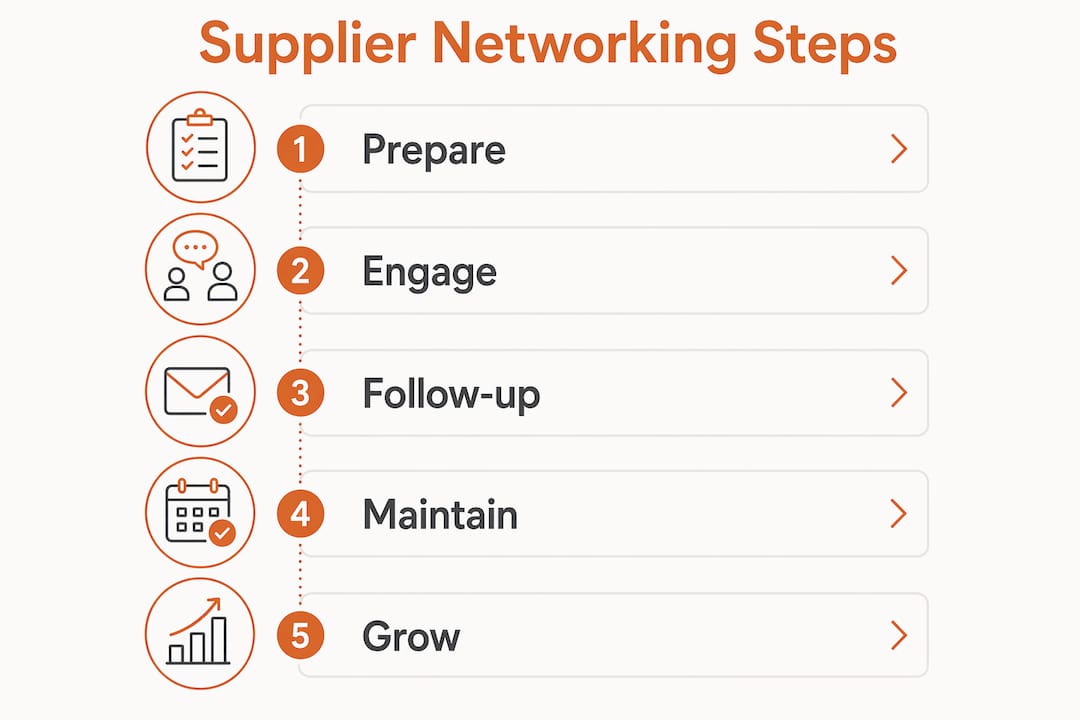
Ecosystem collaboratives align local businesses with large project procurement and compliance expectations to support sustained regional growth. If your region has a formal collaborative or supplier development program, register before the event. These programs often provide coaching on profile completion and connect you with procurement officers in advance.
How to engage effectively at local contractor networking events
Structured engagement at networking events follows a clear sequence. Skipping steps, especially early ones, produces weak results.
-
Identify relevant events. Search for SBA Supplier Matchmaking Expos, regional AGC chapter events, local chamber of commerce construction mixers, and NDIA small business matchmaking sessions. Each targets a different buyer profile.
-
Register early and complete your profile fully. Event portals close registration windows and reject incomplete profiles. Complete every field, including NAICS codes, bonding limits, and project size capacity.
-
Submit your appointment intent topics. Successful matchmaking meetings last 8 minutes plus a 2-minute transition. Requests without specific supply chain topics are rejected outright. Write one focused topic per meeting request, such as “concrete supply for urban infill projects under $2M.”
-
Prepare a 90-second introduction. Cover your company name, primary trade or material category, geographic service area, and one recent project reference. Practice it until it sounds natural, not rehearsed.
-
Bring printed capability statements. Digital is fine as a backup, but a one-page printed sheet is faster to hand over and easier for a buyer to file.
-
Take notes during each meeting. Write the buyer’s name, their specific need, and one follow-up action on the back of their card or in a notes app immediately after the meeting ends.
-
Follow up within 48 hours. Send a short email referencing the specific topic you discussed. Attach your capability statement. Propose one concrete next step, such as a site visit or a call with your project manager.
Pro Tip: At timed matchmaking sessions, open with your ask, not your company history. Buyers have eight minutes and a full schedule. Lead with what you can deliver and what you need. Save the backstory for the follow-up call.
A common mistake is treating the event as a sales call. The goal is a second conversation, not a signed contract. Contractors who connect with local suppliers through structured events consistently report that the relationship built in the follow-up phase, not the event itself, produces actual work.
How do you maintain supplier and subcontractor relationships long term?
Long-term supplier relationships in construction are built on repeated collaboration, shared technical standards, and consistent communication. A supplier who has worked two projects with you already knows your submittal process, your superintendent’s communication style, and your preferred delivery windows. That familiarity has real dollar value.
Repeated collaborations create familiarity that identifies issues early, improving schedule and budget outcomes. A new supplier on every project resets that learning curve each time. The cost of that reset shows up in RFIs, delays, and rework.
Best practices for maintaining community contractor partnerships include:
- Schedule quarterly check-ins. A 20-minute call every three months keeps you visible and gives suppliers a chance to flag capacity changes before they affect your project.
- Share upcoming project pipelines early. Giving a trusted subcontractor 60 days of advance notice on a project allows them to hold capacity for you before bidding opens.
- Align on technical standards. Confirm that your key trade partners hold current OSHA 30 certification, carry adequate bonding, and use compatible project management tools such as Procore.
- Provide written performance feedback. After each project, send a short written summary of what went well and what needs improvement. Suppliers who receive feedback improve faster and prioritize your work.
- Reinvest locally. Choosing local suppliers over distant ones supports regional economic health and builds goodwill that returns in the form of priority scheduling and flexible terms.
Long-term partnerships form through aligned communication and internal processes rather than lowest price selection. Price matters, but a supplier who communicates proactively and delivers on time is worth more than one who bids 5% lower and misses delivery windows. You can qualify subcontractors before project start using a structured vetting process that checks references, certifications, and past project performance.
What are the most common challenges in building a local supplier network?
Building a local supplier network produces predictable obstacles. Knowing them in advance lets you prepare a response before they stall your progress.
| Challenge | Common Cause | Effective Response |
|---|---|---|
| Meeting request rejected | Intent topic too vague or submitted late | Submit specific supply chain topics 3+ days early |
| Supplier at capacity | No advance pipeline communication | Share project forecasts 60 days ahead |
| Urban site storage limits | Constrained infill project footprint | Prioritize geographically close suppliers for just-in-time delivery |
| Shallow relationship pool | Attending too many events without follow-up | Limit events; deepen follow-up with fewer contacts |
| Misaligned quality standards | No formal vetting before engagement | Use a capability statement review and reference check process |
Suppliers close to the site enable just-in-time deliveries that overcome storage limits on constrained urban construction projects. This is especially relevant for infill work in dense metro areas where a staging yard is not an option. Proximity is a procurement criterion, not just a convenience.
Balancing relationship depth versus breadth is a real tension. Contractors who attend every available event but follow up with no one build a wide but shallow network. The contractors who build the most reliable supplier communities attend fewer events and invest more time in the relationships they start. Business opportunity sourcing platforms can help you identify the right events for your trade category and region, reducing the time you spend at events that do not match your buyer profile.
Key takeaways
Supplier networking in the local contractor community produces the strongest results when preparation, structured event engagement, and consistent follow-up work together as a system.
| Point | Details |
|---|---|
| Prepare before every event | Complete your profile and submit specific intent topics at least 3 days before any matchmaking event. |
| Lead with a specific ask | Timed meetings last 8 minutes; open with your supply chain need, not your company history. |
| Follow up within 48 hours | Reference the specific topic discussed and propose one concrete next step to move the relationship forward. |
| Prioritize depth over breadth | Fewer, deeper supplier relationships reduce project risk more than a large, shallow contact list. |
| Use proximity as a criterion | For urban or infill projects, choose suppliers near the site to enable just-in-time delivery and reduce storage constraints. |
Why local supplier networks matter more than most contractors realize
I have spent years watching contractors treat supplier networking as an afterthought, something to do when a project falls apart and they need a sub fast. That approach is expensive and stressful. The contractors who run the smoothest projects are the ones who built their supplier community before they needed it.
What I find most underappreciated is the risk reduction that comes from familiarity. When a supplier has worked three projects with you, they know your superintendent’s expectations, your inspection schedule, and how you handle weather delays. That shared context catches problems before they become change orders. No contract clause replicates that.
The other thing I would push back on is the idea that networking events are primarily about finding new vendors. The best use of a matchmaking expo is deepening a relationship with someone you already know slightly. A brief, structured meeting gives you a reason to follow up, and that follow-up is where the real partnership forms. Treat every event as a relationship accelerator, not a vendor search.
Local economic reinvestment also matters more than contractors typically account for. Suppliers who are embedded in your regional market understand local code enforcement timelines, regional material lead times, and the specific inspection culture of your jurisdiction. That local knowledge has direct project value. It is not just goodwill. It is operational intelligence you cannot buy from a national distributor.
— Rowena
How Constructconnect-rconstructionsolutions supports your supplier network
Building a reliable supplier and subcontractor network takes more than attending events. It requires access to pre-vetted trade partners who meet your technical standards from day one.
Constructconnect-rconstructionsolutions brings 30+ years of AEC industry experience to contractor recruiting and supplier sourcing. Their AEC recruiting services connect local contractors with pre-vetted subcontractors and suppliers who hold current certifications, carry appropriate bonding, and have verified project histories. The prorated 90-day payment model means you only pay for successful placements, reducing the financial risk of expanding your network. For contractors who want to complement their community networking efforts with expert sourcing support, Constructconnect-rconstructionsolutions provides a direct path to qualified trade partners.
FAQ
What is supplier matchmaking in construction?
Supplier matchmaking is a structured process where contractors and suppliers meet in timed, pre-scheduled sessions to identify procurement opportunities. Formal events, such as SBA Supplier Matchmaking Expos, use pre-approved intent topics to match buyers with relevant suppliers.
How do I prepare for a supplier networking event?
Complete your company profile fully, gather current certifications such as OSHA 30, and submit specific supply chain discussion topics at least three days before the event. Buyers reject meeting requests that lack a defined topic.
How long does it take to build a reliable local supplier network?
Building a reliable network typically takes multiple project cycles, since trust and familiarity develop through repeated collaboration rather than a single meeting. Contractors who follow up consistently after events and share project pipelines early accelerate this timeline.
Why do local supplier relationships reduce project risk?
Local suppliers who have worked with you before understand your communication style, submittal process, and delivery requirements. That shared familiarity reduces miscommunication, catches issues earlier, and produces better schedule and budget outcomes.
How many suppliers should a local contractor maintain relationships with?
Depth matters more than volume. A core group of five to ten pre-vetted, reliable suppliers across your key trade categories outperforms a large list of contacts you have never worked with. Prioritize quality of relationship over quantity of connections.