
Why Material Suppliers Need Contractor Networks
Material suppliers who build structured contractor networks shift from reactive vendors to strategic partners who control their sales pipeline, reduce supply chain disruptions, and win more work earlier in the project lifecycle. This is the core argument behind why material suppliers need contractor networks, and the evidence from firms like Autodesk, JE Dunn Construction, and Haskell confirms it. Supplier Relationship Management (SRM) is the recognized industry framework for this approach. SRM moves suppliers beyond transactional delivery into structured, performance-tracked partnerships that generate measurable business value. The difference between a supplier with a contractor network and one without is the difference between forecasting demand and reacting to it.
Why material suppliers need contractor networks to grow
Early contractor engagement shifts suppliers from reactive vendors to strategic partners who improve constructability and coordination. When you are involved before procurement begins, you influence material specifications, sequencing decisions, and budget assumptions. That is where your competitive advantage is built, not at the bid table.

The business outcomes of early involvement are specific and documented. JE Dunn Construction reports that early contractor involvement delivers reduced change orders, faster speed to market, and stronger trust between project stakeholders. For a material supplier, fewer change orders mean fewer emergency reorders, less waste, and more predictable revenue per project.
Digital tools have made early engagement more practical than ever. Richards Building Supply integrated EagleView’s property measurement intelligence directly into its CRM, giving contractors instant property data for faster bidding and purchase order creation. That kind of CRM integration compresses the time between a project signal and a materials decision, which means your quotes land earlier and your order volumes become more predictable.
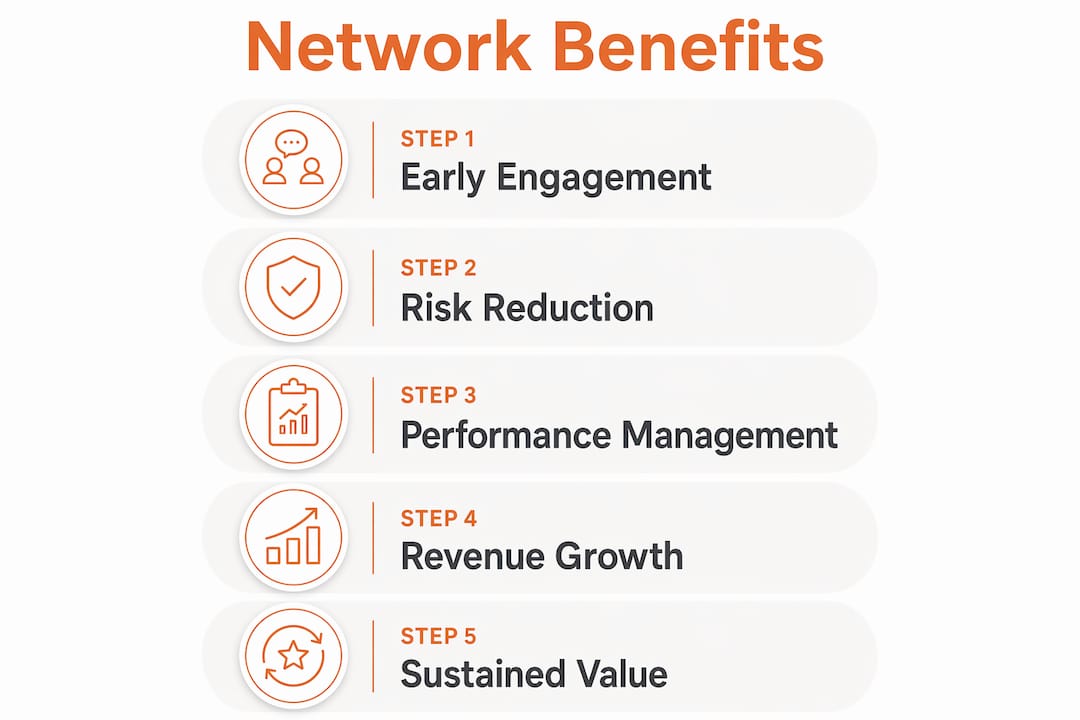
Here is how early engagement creates compounding value for material suppliers:
- Influence material specifications before design is locked, positioning your products as the default rather than a substitute.
- Improve pricing accuracy by receiving project scope details earlier, reducing the risk of underbidding or over-committing inventory.
- Reduce costly change orders by aligning material lead times with construction sequencing from the start.
- Accelerate estimating and ordering through CRM-integrated property intelligence tools that shorten the quoting cycle.
- Build trust with contractors who will return to you on future projects because you helped them win the current one.
Pro Tip: If you are not already using a CRM that connects to project data or property intelligence platforms, that gap is costing you early-stage opportunities. Platforms like Procore and EagleView integrations are now standard in competitive supplier workflows.
How compatibility and collaboration reduce supply chain risk
Compatibility across technical, cultural, and operational dimensions is the foundation of effective contractor networks. Research published in the journal Systems confirms that higher partner compatibility enhances supply chain collaboration, improving risk-response capability and resilience. This is not about having the most connections. It is about having the right ones.
Technical compatibility means your systems, specifications, and delivery processes align with how your contractor partners operate. Cultural compatibility means shared expectations around communication, accountability, and quality standards. Operational compatibility means your lead times, ordering minimums, and logistics capabilities match the contractor’s project schedule requirements. When all three align, coordination becomes predictable rather than reactive.
The distinction between collaboration and integration matters here. Integration implies dependency, where one party’s failure cascades directly into another’s. Collaboration implies coordination with maintained independence, where both parties retain flexibility while sharing information and goals. For material suppliers, the goal is collaboration. You want contractors who communicate proactively about project changes, not contractors whose operational failures automatically become your inventory problems.
Key characteristics of a compatibility-driven contractor network include:
- Shared performance standards: Both parties agree on delivery timelines, quality thresholds, and escalation procedures before a project begins.
- Two-way communication protocols: Regular check-ins, not just reactive calls when something goes wrong.
- Documented risk-response plans: Agreed procedures for handling material shortages, schedule changes, or scope modifications.
- Cultural alignment on accountability: Contractors who report problems early rather than hiding them until they become crises.
- Ongoing performance tracking: Structured feedback loops that identify which contractor relationships are generating value and which are degrading it.
Supplier networks that facilitate risk visibility and coordinated responses are better positioned to maintain operational performance during disruptions. That resilience is a direct product of compatibility, not just volume of connections.
How network design protects suppliers from systemic disruptions
Network topology, meaning the structure of who connects to whom and how, affects how risk propagates through a supply chain. Research published in Nature Scientific Reports demonstrates that rewiring supplier-customer connections can reduce systemic supply chain risk by 16 to 50 percent without lowering production output. That finding reframes how you should think about your contractor network. It is not just a sales channel. It is a risk management structure.
The practical implication is that diversifying your contractor connections, rather than concentrating volume with a small number of partners, reduces your exposure when any single contractor experiences a project delay, financial stress, or capacity constraint. A supplier with 20 active contractor relationships absorbs a single partner failure far better than one with three.
| Network characteristic | Risk impact | Recommended action |
|---|---|---|
| High concentration (1-3 contractors) | Maximum systemic risk exposure | Diversify to at least 8-12 qualified partners |
| Low qualification standards | Partner failures cascade into your operations | Implement TradeTapp or equivalent prequalification |
| No performance tracking | Network quality degrades silently | Schedule quarterly performance reviews |
| Reactive communication only | Disruptions arrive without warning | Establish proactive project update protocols |
| Geographically clustered partners | Regional disruptions affect entire network | Expand geographic coverage of contractor base |
Qualifying and monitoring contractor performance is not optional maintenance. Haskell’s Trusted Partner Network demonstrates that networks structured beyond ad hoc contacts deliver sustained improvements in delivery, quality, and trust. The qualification process screens for financial health, safety records, capacity, and past performance before a contractor enters your network.
Pro Tip: TradeTapp, now part of the Autodesk Construction Cloud, provides contractor prequalification tools that assess safety, financial stability, and capacity. Using a structured prequalification process before adding contractors to your network prevents the most common cause of network degradation: partners who looked reliable until they weren’t.
Practical strategies for building and maintaining contractor networks
Building a contractor network that generates consistent business value requires deliberate structure, not just accumulated contacts. The importance of contractor networks is well established in the AEC industry, but most suppliers underinvest in the management side after the initial connections are made.
Start with a prequalification framework. Tools like TradeTapp allow you to assess contractor capacity, safety certifications such as OSHA 30, financial health, and project history before formalizing a relationship. This step filters out partners who will consume your time and inventory without delivering reliable project volume.
Leverage CRM integrations to support preconstruction workflows. Distributors gain the most value from contractor networks when those networks support preconstruction workflows that shorten lead time from project signals to materials decisions. A CRM connected to project data platforms enables faster takeoffs, quoting, and purchase order creation, which means your contractor partners can move faster and are more likely to bring you in early.
Here is a comparison of reactive versus structured contractor network approaches:
| Approach | Reactive (ad hoc) | Structured (performance-managed) |
|---|---|---|
| Partner selection | Based on availability | Based on prequalification criteria |
| Communication | Triggered by problems | Scheduled and proactive |
| Performance tracking | Informal or absent | Documented quarterly reviews |
| Risk management | Addressed after disruption | Anticipated and planned for |
| Sales predictability | Low, project-by-project | High, pipeline-driven |
Maintain ongoing communication and structured feedback loops. Without feedback loops, supplier quality and delivery standards slip, reducing network effectiveness over time. Schedule quarterly reviews with your top contractor partners. Track on-time delivery rates, order accuracy, and project outcomes. Use that data to reward stronger relationships with priority pricing or early access to new product lines.
Resolving issues before they become disputes is also part of network maintenance. Understanding how to resolve scheduling conflicts between contractors and suppliers keeps projects on track and preserves the trust that makes long-term networks function. Similarly, knowing how to avoid common contract disputes protects both parties and reduces the friction that erodes network value over time.
Key takeaways
Material suppliers who build structured, performance-managed contractor networks gain measurable advantages in sales predictability, supply chain resilience, and project influence that purely transactional supplier relationships cannot deliver.
| Point | Details |
|---|---|
| Early engagement drives revenue | Involving contractors before procurement lets suppliers influence specifications and reduce change orders. |
| Compatibility over quantity | Technical, cultural, and operational alignment with partners produces better risk response than a large but mismatched contact list. |
| Network design reduces disruption | Diversifying and qualifying contractor connections can reduce systemic supply chain risk by 16 to 50 percent. |
| Performance tracking is non-negotiable | Without structured feedback loops and quarterly reviews, contractor networks degrade into inactive contact lists. |
| CRM integration accelerates sales | Connecting property intelligence tools to supplier CRMs shortens the cycle from project signal to purchase order. |
Why I think most suppliers are managing their networks wrong
After working in AEC recruiting and sourcing for over 30 years, the pattern I see most often is this: a material supplier builds a solid list of contractor contacts over time, then treats that list as the network. It is not. A list is just a starting point.
The suppliers who consistently outperform their competitors are the ones who treat their contractor relationships as assets that require active management. They run quarterly performance reviews. They use prequalification tools before adding new partners. They share project pipeline data with their top contractors so both sides can plan ahead. That level of structure is what separates a supplier with stable margins from one who is always chasing the next bid.
What I find most underappreciated is the compounding effect of early involvement. When you are brought in at the preconstruction stage, you are not just selling materials. You are shaping the project. You influence which products get specified, how sequencing is planned, and what the budget assumptions look like. That influence is worth far more than any discount you could offer at the procurement stage.
The contractors who will bring you in early are the ones who trust you. And trust is built through consistent performance, clear communication, and demonstrated expertise. A subcontractor coverage checklist approach, applied to your own contractor network, gives you a structured way to identify gaps and prioritize relationship-building efforts.
The suppliers who treat their contractor networks as strategic assets will continue to gain ground. The ones who treat them as contact lists will keep wondering why their margins are shrinking.
— Rowena
How Constructconnect-rconstructionsolutions helps you build stronger contractor networks

R. Construction Solutions brings 30-plus years of AEC industry experience to the challenge of building and managing contractor networks for material suppliers and distributors. Whether you need to recruit specialized contractors who match your technical and operational requirements, or you want to identify verified business opportunities that connect your products to active project pipelines, the team at R. Construction Solutions has the sourcing infrastructure to support it. Their AEC recruiting services connect suppliers with pre-vetted contractors assessed for capacity, safety credentials, and project history, so you are building your network on qualified relationships from the start, not learning about partner weaknesses mid-project.
FAQ
Why do material suppliers need contractor networks?
Material suppliers need contractor networks to shift from reactive order-filling to proactive project involvement, which improves sales predictability, reduces change orders, and builds long-term revenue stability. Early contractor engagement allows suppliers to influence material specifications before procurement locks in alternatives.
How does a contractor network reduce supply chain risk for suppliers?
Diversifying and qualifying contractor connections can reduce systemic supply chain risk by 16 to 50 percent by preventing single-partner failures from cascading through your operations. Network structure, not just individual partner strength, determines how resilient your supply chain is under disruption.
What tools help suppliers manage contractor networks effectively?
TradeTapp provides contractor prequalification covering safety, financial health, and capacity. CRM platforms integrated with property intelligence tools like EagleView accelerate estimating and purchase order creation, supporting preconstruction workflows that bring suppliers into projects earlier.
How often should suppliers review contractor network performance?
Quarterly performance reviews are the standard for maintaining network quality. Without structured feedback loops, delivery standards and collaboration levels decline over time, reducing the value of even well-established contractor relationships.
What is the difference between contractor collaboration and contractor integration?
Collaboration means coordinated information sharing with maintained independence, where both parties retain flexibility. Integration creates dependency, where one party’s failure directly disrupts the other. Suppliers should build collaborative networks, not integrated ones, to preserve operational resilience.

