
How to Hire a Construction Scheduler Without Losing Time
For most general contractors, the fastest low-risk way to hire a construction scheduler is to engage a specialized AEC recruiting partner or bring on a project-based scheduler. Reserve permanent hires for teams with continuous, year-round scheduling workload. Contract-based schedulers fit single projects, seasonal surges, or interim gaps where a full-time salary doesn’t pencil out.
Three moves to make this week:
- Draft a one-page job spec listing required software (Primavera P6 or MS Project), certifications, and years on comparable project types.
- Ask every candidate for a sample CPM schedule and a short write-up of a recovery plan they’ve built.
- Set a 30/60/90-day onboarding milestone plan before the offer goes out, not after, following best practices outlined in construction task management to ensure schedule communication and progress monitoring are clear.
Key Takeaways
Hiring a construction scheduler successfully depends on matching the hiring route to your workload, requiring real work samples during vetting, and locking in milestone-based onboarding terms.
| Point | Details |
|---|---|
| Match hiring route to workload | Use permanent hires for continuous need, contract schedulers for single projects, recruiting partners for speed. |
| Require work samples early | Ask for a sample CPM and recovery plan before the first interview, not after an offer. |
| Verify safety and process records | Check EMR, OSHA 300A, and how candidates handle change orders and communication cadence. |
| Set contractual milestones | Build 30/60/90-day baseline schedule and sign-off checkpoints directly into the contract. |
| Consider a prorated recruiting model | Constructconnect-rconstructionsolutions ties fees to first-90-day success and draws from a pre-vetted AEC network. |
Table of Contents
- How Do You Hire a Construction Scheduler?
- Job-Spec Template: What to Require From a Construction Scheduler
- What Should You Ask When Interviewing a Scheduler?
- Onboarding a New Scheduler: Milestones That Protect the Timeline
- Why R. Construction Solutions Fits This Hiring Problem
- Get Matched With a Vetted Construction Scheduler Faster
- Sources
- FAQ
How Do You Hire a Construction Scheduler?
Hiring a construction scheduler comes down to three routes, and picking the wrong one wastes both money and weeks you don’t have. Each option trades speed against control differently, and the right choice depends on how steady your scheduling workload actually is.
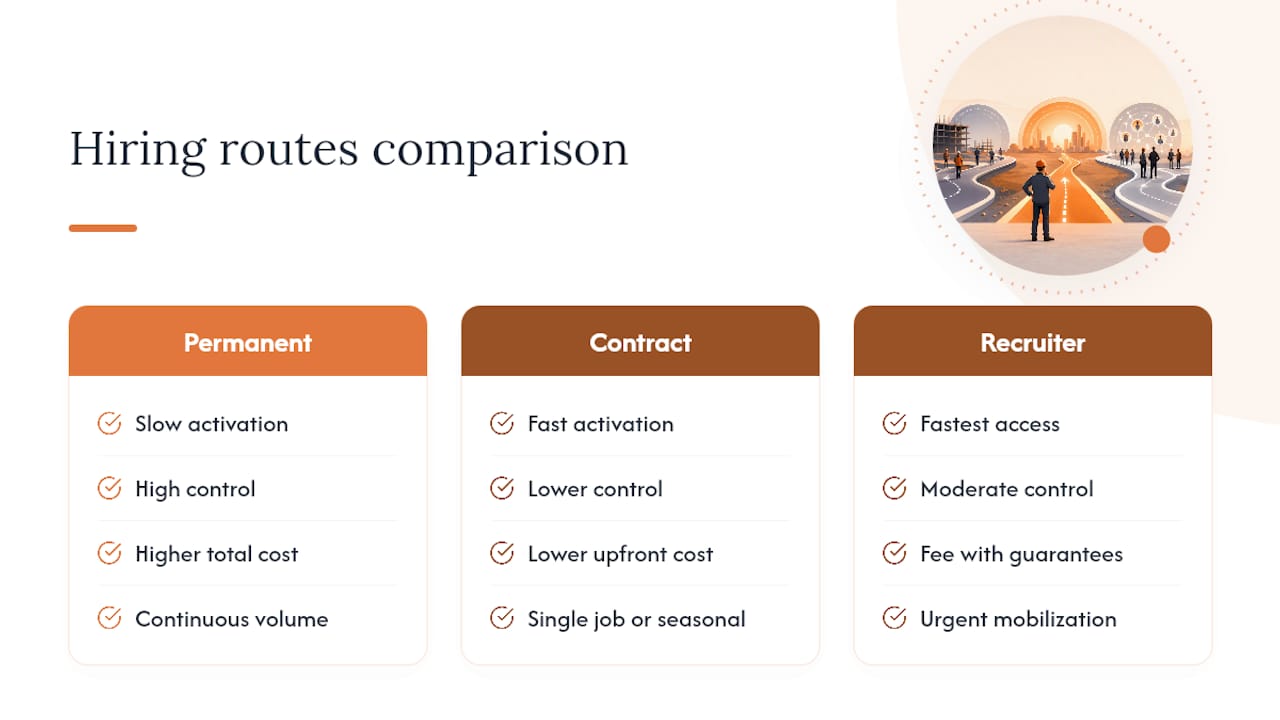
Permanent hire makes sense when you have continuous project volume that keeps a scheduler busy year-round. You get institutional knowledge and someone who learns your subcontractor base over time, but total cost runs higher once you factor benefits, and time-to-fill for a qualified mid-career scheduler is often lengthy due to scarcity of specialized AEC roles, since specialized AEC roles are frequently scarce and not immediately available.
Contract or project-based scheduling works best for a single job, a seasonal crunch, or covering a scheduler out on leave. It’s faster to activate, but you need a tighter scope document and clear reporting expectations up front, since a contractor won’t absorb ambiguity the way an embedded employee might.
A recruiting partner gives you the fastest access to vetted candidates, often paired with replacement guarantees and prorated fee structures that tie your payment to actual placement success.

Consider a mid-size GC awarded a large mixed-use project with a tight mobilization window. Posting a permanent job listing and waiting for applicants isn’t realistic. A recruiting partner who already has pre-screened schedulers on file, or a project-based scheduler ready to start within days, wins every time in that scenario.
Job-Spec Template: What to Require From a Construction Scheduler
A vague job posting attracts vague candidates. A tight job-spec template does the filtering for you before the first interview.
- Core responsibilities. Maintain and update the critical path method (CPM) schedule, produce recovery plans when the project slips, coordinate procurement timing for long-lead items like curtain wall, switchgear, or elevators, and issue weekly progress updates tied to actual milestones, not calendar dates.
- Technical proficiency. Require hands-on Primavera P6 or MS Project experience, familiarity with schedule risk analysis, and at least a working understanding of BIM coordination. Ask whether they’ve integrated scheduling with procurement tracking systems, not just built schedules in isolation.
- Experience and soft skills. Specify years of experience on comparable project types (hospital versus multifamily versus industrial scheduling differ significantly), trade coordination experience across multiple subcontractors, and a defined stakeholder reporting cadence. Scheduling conflicts between trades happen weekly; you want someone who resolves them without escalating every disagreement to you.
- Optional but valuable additions. Note any scheduling certifications (PMI-SP or AACE certifications carry weight), site visit frequency expectations, and whether travel is required. Ask applicants to submit a sample CPM schedule and a short-interval lookahead as part of the application, not after you’ve already extended an offer.
Pro Tip: Require the sample schedule before the first phone screen, not after. Candidates who stall or send a generic template rarely have the depth to manage a live, multi-trade schedule under pressure.
What Should You Ask When Interviewing a Scheduler?
A scheduler who talks fluently about “critical path” but can’t walk you through a real recovery plan is a hire you’ll regret by month three. Structure the interview to surface actual competence, not rehearsed vocabulary.
Ask direct, scenario-based questions:
- “Walk me through how you’d sequence structural steel against MEP rough-in on a five-story building.” A strong answer names specific trade dependencies, not generalities.
- “A long-lead item just came back with a 12-week delay. What do you do in the next 48 hours?” Listen for procurement escalation steps, not just a vague “update the schedule.”
- “How often do you update and redistribute the CPM, and to whom?” Weekly cadence tied to specific stakeholders is the right answer; “as needed” is a red flag.
Document review matters as much as conversation. Request a sample CPM and, where possible, evidence of how the candidate handled schedule recovery and long-lead procurement on a past project. Ask for references specifically from projects similar in size and trade mix to yours, not just any past employer.
If you’re hiring through a recruiting partner rather than direct, ask them the same rigor you’d apply to a candidate: how do they vet for license, insurance, and safety history? A firm’s EMR and OSHA 300A records correlate with schedule reliability, and a recruiter who can’t speak to a candidate’s safety background hasn’t done the homework. Also confirm replacement guarantees and how prorated fees work if the placement doesn’t work out in the first 90 days.
Watch for vague process answers, an unwillingness to share a real work sample, and recruiters who push credentials over how the candidate actually communicates and manages change orders day to day.
Onboarding a New Scheduler: Milestones That Protect the Timeline
The first 90 days determine whether a new scheduler becomes an asset or a liability. Build these checkpoints into the contract, not just the internal onboarding plan.
- Day 30: Baseline schedule accepted and signed off by the project team, plus a completed long-lead procurement list identifying every item requiring early release.
- Day 60: First recovery plan drafted (even if hypothetical) and stakeholder sign-off process fully established, so everyone knows who reviews updates and when.
- Day 90: Full reporting cadence running independently, with weekly updates distributed without prompting.
Contract terms should include a defined trial period, prorated fee language tied to those first 90 days, and a replacement clause if the fit isn’t right. Specify who owns the schedule data and any confidentiality terms covering procurement pricing or subcontractor lists. Milestone-linked payments, rather than a single lump sum, keep incentives aligned on both sides.
Why R. Construction Solutions Fits This Hiring Problem
Most of the friction in scheduler hiring comes from two things: not knowing who’s actually qualified, and paying full commission before you know if the placement sticks. Constructconnect-rconstructionsolutions built its model around both problems directly.
- Over 30 years placing AEC talent means access to schedulers who’ve already been screened for CPM depth, not just resume keywords.
- A lower commission rate paired with a prorated payment structure over the first 90 days means you’re not writing a full check on day one for a hire that might not work out.
- A pre-vetted network of subcontractors and suppliers backs up the scheduler you hire, since a schedule is only as reliable as the trades and vendors feeding it.
On an initial call, ask about candidate sourcing timelines for your specific project type, request examples of past placements in similar trades, and get clear on how the refund or replacement mechanics actually work if the first 90 days don’t pan out.
Pro Tip: Ask any recruiting partner to name two comparable placements they’ve made in the last year, not just their overall placement count. Specificity separates a real track record from a sales pitch.
A Realistic Read on the First 90 Days
The right hire typically shows up fast. Expect clearer buyout coordination on long-lead items, earlier flags on procurement risk, and measurable drops in critical-path slips within 60 to 90 days. The most common mistake I see is handing a new scheduler an undefined scope with no contractual milestones, then wondering why accountability breaks down by month two.
— Rowena
Get Matched With a Vetted Construction Scheduler Faster
Constructconnect-rconstructionsolutions replaces the guesswork of a general staffing post with a recruiting process built specifically for AEC roles, backed by a prorated payment structure so you pay in step with a successful placement, not before one.

If you’ve been weighing a permanent hire against a contract scheduler and can’t justify the time or overhead of running that search yourself, this is the shortcut. Constructconnect-rconstructionsolutions draws from a pre-vetted pool of schedulers and can also connect you to reliable subcontractors and suppliers who support the schedule once your hire is in place. Lower commission rates than a typical staffing firm mean the placement fee doesn’t eat into project margin the way ad-hoc recruiting often does.
Start by reviewing R. Construction Solutions’ recruiting services and requesting a candidate shortlist for your open scheduling role. If you’re also building out office or field staff more broadly, the company overview lays out the full range of placement support available.
Sources
For deeper vetting frameworks, see contractor evaluation standards and why credential checks alone fail. Internally, review our subcontractor reliability checklist and project manager interview questions.
- Choosing commercial construction contractor | NGC Group
- Don’t Just Check License & Insurance —Check This Instead | Weston Builders Inc.
FAQ
How Long Does It Take to Hire a Construction Scheduler?
Permanent hires often take 60 days or more given how scarce mid-career scheduling talent is, while a recruiting partner or project-based scheduler can typically fill the role in days to a few weeks.
Should I Hire a Scheduler Permanently or on Contract?
Choose permanent when you have continuous scheduling workload across multiple projects; choose contract or project-based when you need coverage for a single job, a surge, or an interim gap.
What Software Should a Construction Scheduler Know?
Primavera P6 and MS Project are the industry standards, and strong candidates should also show basic BIM awareness and experience linking schedules to procurement tracking.
What Does a Prorated Fee Structure Mean When Hiring Through a Recruiter?
It means your placement fee is paid in installments tied to the new hire’s first 90 days on the job, so you’re not paying the full commission upfront for a placement that hasn’t proven out yet, a model Constructconnect-rconstructionsolutions uses directly.
What Red Flags Suggest a Scheduler Isn’t Qualified?
Vague answers about update frequency, no sample CPM or recovery plan to share, and an inability to describe how they’ve handled a real long-lead procurement delay are all warning signs.