
Finding Buyers for Your Contractor Business in 2026
Finding buyers for your contractor business is a process that requires targeting the right buyer pools, preparing your financials, and running a marketing system that generates qualified leads consistently. The industry term for this process is “business exit planning,” but the practical work spans M&A preparation, contractor marketing strategies, and lead pipeline management. Contractors who approach this without a clear plan routinely leave money on the table or fail to close at all. This guide covers who the buyers are, how to attract them, and what you need to fix before you go to market.
Who are the buyers for contractor businesses and what do they look for?
The main buyer pools for contracting businesses in 2026 fall into three distinct categories. Each group has different financial thresholds, timelines, and priorities.
- SBA loan-funded individuals. These buyers target businesses with EBITDA between $250K and $2M. They use SBA 7(a) loans, and their deal timelines run 6–15 months. They want owner-operated businesses with clean books and transferable licenses.
- Existing operators seeking expansion. These are contractors or construction company owners who want to add capacity, geography, or specialty. They move faster than individual buyers and focus heavily on crew quality, backlog, and customer relationships.
- Private equity groups. These buyers target EBITDA between $1M and $25M. They prioritize scalable operations, management team depth, and recurring revenue. They will walk away quickly if owner dependency is high.
Every buyer type evaluates the same core factors, even if their financial thresholds differ. Backlog quality matters more than trailing EBITDA. Buyers audit backlog margin, customer diversity, and completion risk to forecast forward earnings. A strong trailing year means little if your pipeline is thin or concentrated in one client.
Customer concentration is a specific red flag. Single-client concentration above 20% of revenue lowers valuation or kills deals outright. Buyers discount companies where the owner personally controls key client relationships, because those relationships may not survive a change in ownership. Understanding these criteria shapes every marketing and preparation decision you make.
How do you attract buyers with contractor marketing strategies?
Generating qualified contractor business leads requires a layered approach. You build from free local presence first, then add paid channels, then tighten your conversion process. Skipping layers wastes money and produces inconsistent results.
-
Claim and optimize your Google Business Profile. This is the highest-ROI starting point for any contractor. Responding to reviews within 24 hours produces up to 25% more positive review submissions. More positive reviews signal credibility to both project buyers and business acquisition buyers evaluating your reputation.
-
Run Google Local Services Ads. These ads place your business at the top of search results for ready-to-book buyers. They are pay-per-lead, not pay-per-click, which means you only pay when a prospect contacts you directly. This format works especially well for specialty contractors in competitive metro markets.
-
Replace generic homepages with conversion-optimized landing pages. Tailored landing pages can triple qualified lead generation from the same ad spend. A generic homepage sends high-intent traffic to a page that answers no specific question. A landing page built around one service, one geography, and one call to action converts that traffic into booked jobs.
-
Build a referral system. Ask past clients for referrals at project close, not months later. Referral leads convert at higher rates than paid leads and cost nothing beyond the ask. Document your referral sources so you can show a buyer that your pipeline is not entirely dependent on ad spend.
-
Run targeted digital ads on LinkedIn or Meta. LinkedIn works well for commercial contractors targeting facility managers, developers, or general contractors. Meta works better for residential contractors targeting homeowners in specific zip codes.
Pro Tip: Track cost per booked job, not cost per lead. A channel that delivers 50 leads at $10 each is worthless if none convert. A channel that delivers 10 leads at $50 each with a 60% close rate is your best asset.
Layering free, paid, and conversion tactics into a single system transforms strangers into quoting customers and sustains business growth that buyers can verify. Without this system, lead volume leaks cause wasted ad spend and a pipeline that looks unreliable on paper.

How do you prepare your contractor business to attract buyers?
Business preparation is where most contractors underestimate the work required. Advisors recommend starting preparation 6–12 months before your planned sale date. That timeline gives you enough runway to fix the issues that kill deals at closing.
The preparation checklist covers several critical areas:
- Clean financials. Buyers and their lenders require 3 years of tax returns, profit and loss statements, and balance sheets. Commingled personal and business expenses, cash transactions without documentation, and inconsistent revenue recognition all create doubt. Fix these before you engage any buyer.
- Realistic valuation. Most sellers overestimate value based on revenue rather than EBITDA. Get a professional valuation before setting expectations. An inflated asking price wastes your time and signals inexperience to serious buyers.
- Owner independence. Buyers discount companies where daily operations depend on the founder. Build a management layer that can handle estimating, scheduling, and client communication without you. Document your processes so a new owner can follow them.
- Licensing and bonding transferability. Bonding capacity tied to the owner’s personal credit does not transfer automatically. Secure written surety confirmation before going to market. Licensing requirements vary by state and specialty. Identify which licenses are entity-held versus personally held and resolve any gaps early.
- Documented policies and procedures. Safety programs, OSHA compliance records, subcontractor qualification processes, and HR policies all reduce buyer risk perception. A buyer acquiring a specialty contractor wants to see that the business runs on systems, not on the owner’s memory.
Pro Tip: Run a “deal reality check” before engaging buyers. Have an advisor review your financials, licensing, customer concentration, and backlog for red flags. Fixing problems before due diligence is far cheaper than renegotiating price after a buyer finds them.
Contractors who address these issues early also benefit from better deal terms. A business that looks clean and well-managed commands a higher multiple and attracts more serious buyers. You can read more about the operational risks that affect buyer confidence in this practical exit guide.
How do you build a qualified buyer lead pipeline systematically?
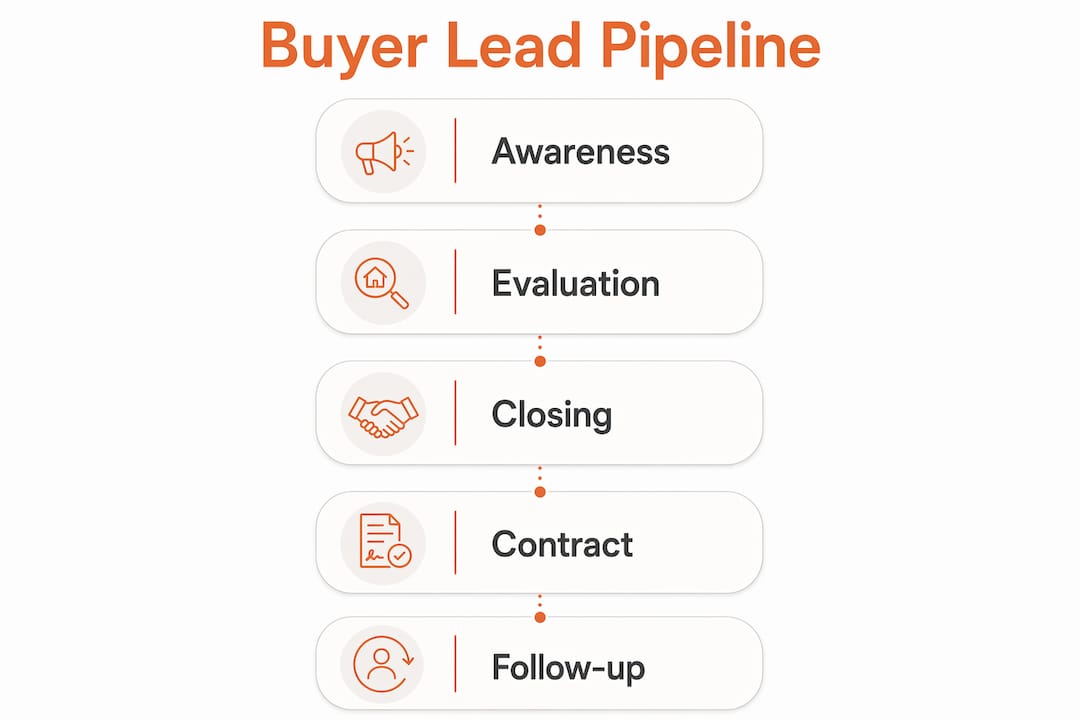
A qualified lead pipeline maps every step from first contact to signed contract. Without a systemized process covering all points from search to booked job, lead volume leaks cause wasted ad spend and lost buyers. The goal is not more leads. The goal is more of the right leads moving forward consistently.
The pipeline has three stages: awareness, evaluation, and close. Each stage requires different tactics and different metrics.
| Pipeline stage | Primary tactic | Key metric |
|---|---|---|
| Awareness | Google Business Profile, Local Services Ads | Impressions, profile views |
| Evaluation | Landing pages, review volume, referral follow-up | Lead-to-quote conversion rate |
| Close | Response speed, accurate estimates, follow-up cadence | Cost per booked job |
Tracking lead quality matters more than tracking lead count. A contractor with 20 qualified leads per month and a 50% close rate outperforms one with 80 unqualified leads and a 10% close rate. Review your pipeline metrics monthly and cut channels that produce low-quality leads regardless of volume.
Off-market direct introductions compress deal timelines compared to traditional broker auctions. Contractors who close sales in 90–180 days typically have an established buyer network or work with an advisor who maintains one. Traditional broker processes often take 9–18 months. Building relationships with potential buyers before you are ready to sell gives you options and negotiating leverage when the time comes.
Keeping your construction projects on budget also signals operational discipline to buyers reviewing your project history. Cost overruns on past jobs raise questions about estimating accuracy and crew management, both of which affect buyer confidence.
Key Takeaways
Finding buyers for your contractor business requires clean financials, a documented lead pipeline, and a business that runs without the owner at the center of every decision.
| Point | Details |
|---|---|
| Know your buyer pool | Target SBA buyers, operators, or private equity based on your EBITDA range and timeline. |
| Build a layered marketing system | Combine Google Business Profile, Local Services Ads, and landing pages to generate consistent leads. |
| Prepare financials early | Start 6–12 months before your target sale date to fix deal killers before due diligence. |
| Reduce owner dependency | Document processes and build a management team so operations continue without you. |
| Track cost per booked job | Measure pipeline quality, not just lead volume, to identify your best-performing channels. |
What I’ve learned about finding the right buyer fit
After years of working inside the AEC industry, the pattern I see most often is this: contractors spend years building excellent businesses and then rush the exit. They go to market without clean financials, without a management team, and without a clear picture of who their buyer actually is. Then they wonder why serious buyers walk away or offer less than expected.
The buyer landscape in 2026 is more sophisticated than it was five years ago. Private equity groups now actively target specialty contractors with EBITDA above $1M. SBA-funded individual buyers are more educated about deal structure than ever before. These buyers have advisors, and those advisors know exactly what to look for. If your business is not prepared, they will find the problems before you do.
The contractors I’ve seen exit well share one trait: they treated the sale as a project with a timeline, milestones, and deliverables. They started preparation early, got a realistic valuation, fixed their customer concentration issues, and built a marketing system that showed buyers a healthy, growing pipeline. They also worked with specialized M&A advisors who understood construction-specific risks like bonding transferability and backlog margin.
My honest advice is to stop thinking about finding buyers as a sales problem. It is an operations problem first. Fix the business, document the systems, and the right buyers will recognize the value. The marketing and outreach come second. A well-prepared business with a clear story attracts buyers. A disorganized one, no matter how well marketed, repels them.
— Rowena
How Constructconnect-rconstructionsolutions supports contractors connecting with buyers
Constructconnect-rconstructionsolutions brings over 30 years of AEC industry experience to the work of connecting contractors with qualified buyers, suppliers, and subcontractors. The firm’s business opportunity sourcing service helps contractors identify and connect with vetted project buyers and expansion partners, cutting through the noise of unqualified inquiries.
For contractors focused on scaling before a sale, Constructconnect-rconstructionsolutions also provides AEC recruiting services that help you build the management team buyers want to see. A prorated payment structure means you only pay for successful placements. If you are preparing your business for a buyer conversation in the next 12–18 months, building the right team now is one of the highest-return moves you can make.
FAQ
Who are the main buyers for a contractor business?
The three primary buyer types are SBA loan-funded individuals targeting EBITDA of $250K–$2M, existing operators seeking expansion, and private equity groups targeting EBITDA of $1M–$25M. Each group has different timelines and valuation priorities.
How long does it take to find a qualified buyer?
Individual buyers using SBA 7(a) loans typically take 6–15 months to close. Off-market direct introductions can compress the timeline to 90–180 days compared to traditional broker processes that often run 9–18 months.
What do buyers look for in a contractor business?
Buyers prioritize backlog quality, customer diversity, owner independence, and clean financials. Single-client concentration above 20% of revenue and heavy owner dependency are the two most common reasons deals fall apart.
How do I generate contractor business leads before a sale?
Build a layered system starting with a Google Business Profile, then Google Local Services Ads, then conversion-optimized landing pages. Track cost per booked job rather than raw lead count to measure what actually works.
When should I start preparing my contractor business for sale?
Start at least 6–12 months before your target sale date. That runway gives you time to clean financials, resolve licensing and bonding issues, reduce owner dependency, and document your processes before buyers begin due diligence.

