Construction PM Certification: What You Need to Know in 2026
Construction project management certification is a specialized credential that confirms your ability to lead construction projects through industry-specific training, testing, and verified field experience. Unlike general project management credentials, this designation covers the jobsite realities that define the construction industry: OSHA compliance, blueprint reading, subcontractor scheduling, and permit coordination. Two credentials stand out in 2026: the PMI Construction Professional (PMI-CP), issued by the Project Management Institute (PMI), and the Certified Construction Manager (CCM), issued by the Construction Management Association of America (CMAA). If you are considering a career in construction project management, understanding what these credentials require and what they deliver is the clearest first step you can take.
What is construction PM certification and who issues it?
Construction PM certification is a formal credential that validates a professional’s ability to manage construction projects from planning through closeout. The term covers several distinct credentials, so knowing which body issues which credential matters. The PMI issues the PMI-CP, designed for professionals who manage construction-specific projects and want a credential recognized across the AEC industry. The CMAA issues the CCM, widely regarded as the gold standard for senior construction managers. Both credentials require documented experience, a formal application, and a proctored exam. They are not interchangeable with general credentials like the Project Management Professional (PMP), which focuses on universal leadership frameworks rather than site-specific practice.
The CCM carries particular weight with owners, general contractors, and public agencies. Employers see construction PM certifications as a professional filter, but they pair that filter with a baseline expectation of a degree in construction management or a related field plus direct field experience. Certification validates specialized skills; it does not replace the foundational credentials employers already expect.

What qualifications does a construction PM need for certification?
Eligibility requirements separate construction PM credentials from general PM credentials more than any other factor. The CCM sets a clear bar based on your education level.
- With a bachelor’s degree: 4 years of construction management experience, with at least 2 years in a management role.
- Without a degree: 8 years of total construction experience, including 4 years in a management capacity.
- Educational background: Degrees in construction management, civil engineering, architecture, or a related field are the most common pathways.
- Professional development hours: Many programs require documented continuing education or professional development units (PDUs) before you sit for the exam.
- Reference requirements: Both the CCM and PMI-CP require professional references who can verify your experience claims.
The PMP, by contrast, requires 36 months of project leadership experience with a four-year degree, or 60 months without one, across any industry. That lower bar reflects the PMP’s universal scope. Construction PM credentials demand more because the jobsite environment demands more. If you are early in your career, entry-level construction roles that build documented management hours are the most direct path toward CCM eligibility.
Pro Tip: Keep a running log of your project roles, contract values, and management responsibilities from your first day on the job. CCM and PMI-CP applications require specific documentation, and reconstructing years of experience from memory is far harder than maintaining a simple spreadsheet as you go.
How do construction PM certification programs work, and what do they cost?
Program structures vary by credential and provider, but most follow a multi-course sequence spread over several months. University-based certificate programs, such as the one offered by the University of San Diego, typically span multiple courses and cost between $2,219 and $2,791. That range covers tuition for the full sequence but does not include exam fees, study materials, or the time you invest in preparation.
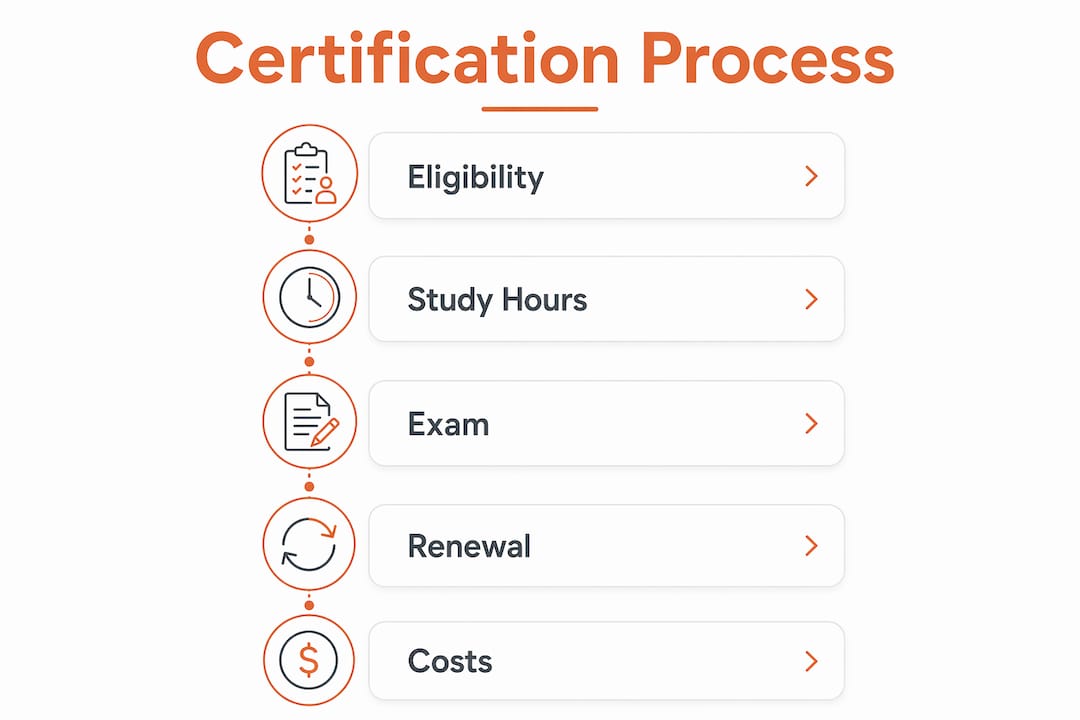
The PMI-CP exam format is specific and demanding. The exam consists of 120 questions with a 230-minute time limit. That works out to roughly 115 seconds per question, which rewards candidates who have internalized the material rather than memorized it.
| Credential | Exam Questions | Time Limit | Renewal Cycle |
|---|---|---|---|
| PMI-CP | 120 | 230 minutes | Every 3 years (PDUs required) |
| CCM | Varies by cycle | Varies | Every 3 years (PDUs + work experience) |
| PMP | 180 | 230 minutes | Every 3 years (60 PDUs required) |
The CCM renewal cycle runs every 3 years and requires both professional development credits and documented ongoing work experience. That ongoing commitment is a cost candidates often underestimate at the start. Budget for exam prep courses, application fees, and the time required for PDUs across the full certification lifecycle, not just the initial exam.
Pro Tip: Factor in at least 100–150 hours of study time before your exam date. The hidden costs of certification go well beyond the application fee. Prep materials, practice exams, and lost weekend hours add up faster than most candidates expect.
What are the benefits of obtaining construction PM certification?
Certification delivers value at two levels: career positioning and practical job readiness. On the career side, a CCM or PMI-CP signals to employers that you have met a verified standard. That matters most in competitive hiring situations where multiple candidates hold similar degrees and experience.
- Resume differentiation: Certified candidates stand out in applicant pools for senior PM and superintendent roles.
- Salary potential: Certified construction managers consistently command higher compensation than non-certified peers in equivalent roles.
- Employer confidence: Certification reduces the perceived hiring risk for owners and GCs taking on a new project manager.
- Regulatory preparedness: Certified PMs demonstrate working knowledge of OSHA standards, permit processes, and compliance documentation.
- Subcontractor management: Certification programs train you to manage subcontractor workflows, a skill that directly affects project delivery timelines.
“Certification validates specialized expertise but does not replace a bachelor’s degree and onsite experience for career advancement. The credential works best when it supplements a strong field record, not when it substitutes for one.”
Entry-level workers gain immediate value from OSHA-30 safety training and foundational certificates, while the CCM is better suited for advanced managerial roles. Choosing the right credential for your career stage matters as much as choosing to certify at all. You can review how project manager responsibilities evolve across project phases to identify which skills your current role is already building.
How does construction PM certification differ from general PM credentials?
The PMP and CCM are not competing credentials. They address different problems. The PMP equips professionals with universal frameworks for scope, schedule, budget, and stakeholder management across any industry. The CCM and PMI-CP equip professionals with the construction-specific knowledge that those universal frameworks do not cover.
Construction PM certifications cover jobsite realities such as blueprint reading, subcontractor workflows, OSHA compliance, and permit coordination. None of those topics appear in the PMP curriculum in any meaningful depth. A PMP-certified manager moving into construction without a construction-specific credential faces a real knowledge gap on day one.
| Skill Area | PMP | CCM / PMI-CP |
|---|---|---|
| Scope and schedule management | Yes | Yes |
| OSHA compliance and safety | No | Yes |
| Blueprint reading | No | Yes |
| Subcontractor scheduling | No | Yes |
| Permit coordination | No | Yes |
| Federal acquisition and contracting | Partial | Yes (see federal contracting credentials) |
Ignoring the distinction between general and construction-specific PM credentials risks real unpreparedness for complex field conditions and contract types. Employers in the AEC industry recognize this gap. A candidate who holds only a PMP applying for a construction PM role will face harder questions about site-specific competencies than a CCM holder will.
Key Takeaways
Construction PM certification is most valuable when it supplements documented field experience and a relevant degree, not when it stands alone.
| Point | Details |
|---|---|
| Two leading credentials | The CCM (CMAA) and PMI-CP (PMI) are the recognized standards for construction PM certification in 2026. |
| Experience requirements matter | CCM requires 4 years of management experience with a degree, or 8 years total without one. |
| Program costs and exam format | Certificate programs cost $2,219–$2,791; the PMI-CP exam runs 120 questions in 230 minutes. |
| Construction-specific curriculum | CCM and PMI-CP cover OSHA compliance, blueprint reading, and subcontractor management that PMP does not. |
| Renewal is ongoing | Both CCM and PMI-CP require renewal every 3 years with PDUs and continued work experience. |
Certification is a tie-breaker, not a shortcut
I have spent years watching hiring decisions play out in the AEC industry, and the pattern is consistent. Certification rarely wins a role on its own. What it does is break ties. When two candidates have comparable field experience and education, the one with a CCM or PMI-CP almost always advances. That is the honest value of the credential.
What I find underappreciated is the renewal commitment. Candidates focus on passing the exam and then discover that maintaining the credential requires sustained professional development. The ongoing PDU requirements are not a formality. They push you to stay current with evolving OSHA standards, contract law changes, and new construction technologies. That ongoing learning is arguably more valuable than the initial credential.
My advice for anyone early in their career: start with OSHA-30 and a foundational construction management course. Build your documented management hours deliberately. Pursue the CCM as a senior credential once you have the experience to back it up. Chasing the CCM before you have the field record to support it puts the credential ahead of the substance it is supposed to represent. The credential should confirm what you already know, not substitute for knowing it.
— Rowena
How Constructconnect-rconstructionsolutions connects certified PMs with the right roles
Earning a construction PM certification is a significant investment. Finding a role that actually uses those credentials is a separate challenge, and that is where Constructconnect-rconstructionsolutions makes a direct difference.

Constructconnect-rconstructionsolutions specializes in AEC industry recruiting with over 30 years of experience placing pre-vetted candidates in construction project management roles. The team understands what employers in the AEC sector actually require, from CCM credentials to Procore experience to OSHA-30 compliance. Whether you are a certified construction PM ready for your next role or a firm looking to fill a critical project management position, Constructconnect-rconstructionsolutions connects the right people to the right projects with a prorated payment structure that ensures you only pay for successful placements.
FAQ
What is construction PM certification?
Construction PM certification is a credential issued by bodies like PMI or CMAA that validates a professional’s ability to manage construction projects using industry-specific skills, including OSHA compliance, blueprint reading, and subcontractor coordination.
How long does it take to get a CCM certification?
The CCM requires 4 years of construction management experience with a degree, or 8 years without one, before you are eligible to apply. Exam preparation typically adds several additional months.
How much does a construction PM certification program cost?
University-based construction PM certificate programs typically cost between $2,219 and $2,791. That figure covers coursework but does not include exam fees, study materials, or time investment.
Is the CCM or PMP better for a construction career?
The CCM is the stronger credential for construction-specific roles because it covers site realities like OSHA compliance, permit coordination, and subcontractor management that the PMP does not address in depth.
How often do construction PM certifications need to be renewed?
Both the CCM and PMI-CP require renewal every 3 years. Renewal requires documented professional development units and, for the CCM, continued work experience in construction management.